Topcoat Services installs commercial and industrial epoxy flooring throughout New England.
Commercial & Industrial
A commercial epoxy floor is a resinous flooring system installed over prepared concrete to provide a finished surface suited to the space’s traffic, appearance and exposure requirements. Options include solid-color coatings, broadcast finishes and thicker industrial systems. Installed cost depends on preparation, system build, repairs and installation conditions.
Your floor has to handle the work happening above it. Forklift traffic, daily cleaning, chemical exposure and heavy equipment all affect which flooring system belongs in your facility.
Topcoat Services installs commercial and industrial epoxy flooring throughout New England. We work with facility managers, business owners and general contractors to assess the concrete, select the right system and plan the installation around how your space operates.
Whether you’re replacing a failing coating or finishing a new building, we start with the conditions that determine how your floor will perform.
Why Epoxy
A bonded resin surface built for foot traffic, carts and equipment.
Fewer joints and cracks where dirt and moisture collect, so cleaning is simpler.
Protection from spills and routine cleaning products when the system is specified correctly.
Smooth, sealed surfaces that wipe and scrub clean.
A range of colors, textures and finishes to suit the space.
A warehouse aisle and a laboratory may both need resinous flooring, but their requirements can be very different. Before recommending a system, we consider:
These details guide the preparation, system build and finish, and they help you understand what your proposal includes and why.
Commercial epoxy flooring uses a resin and hardener that react to form a bonded coating over prepared concrete. Depending on the application, the complete floor may include a primer, epoxy body coats, broadcast aggregate and a compatible protective topcoat.
Epoxy is one part of a flooring system. Its thickness, texture and performance depend on the specified materials and how the floor is installed.
Our Systems
System 01
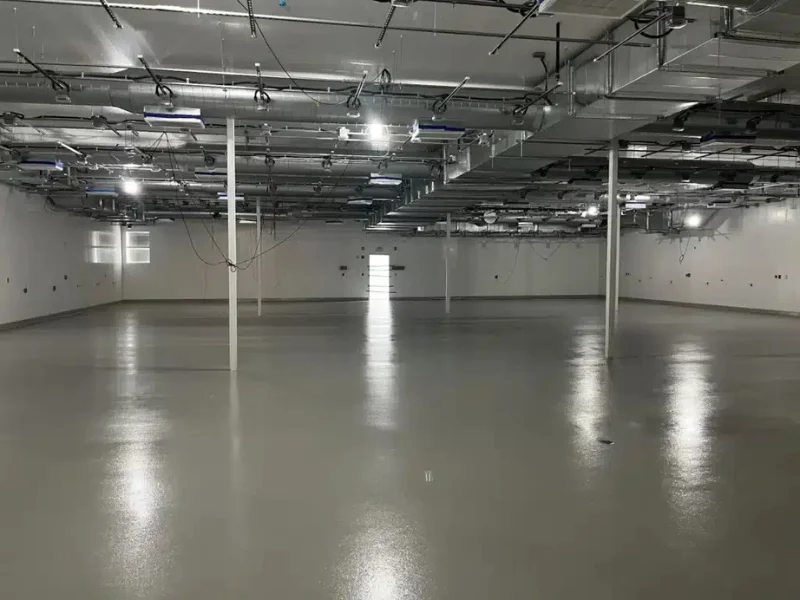
A smooth, uniform surface for spaces where appearance and straightforward maintenance are priorities. Self-leveling systems are poured and spread to create a continuous finish.
Best for: Spaces that value a clean, uniform look and simple maintenance.
System 02
A thicker, trowel-applied build for areas with heavier loads, rougher use or worn concrete that needs more body.
Best for: Areas with heavier loads, rougher use or uneven, worn concrete.
System 03
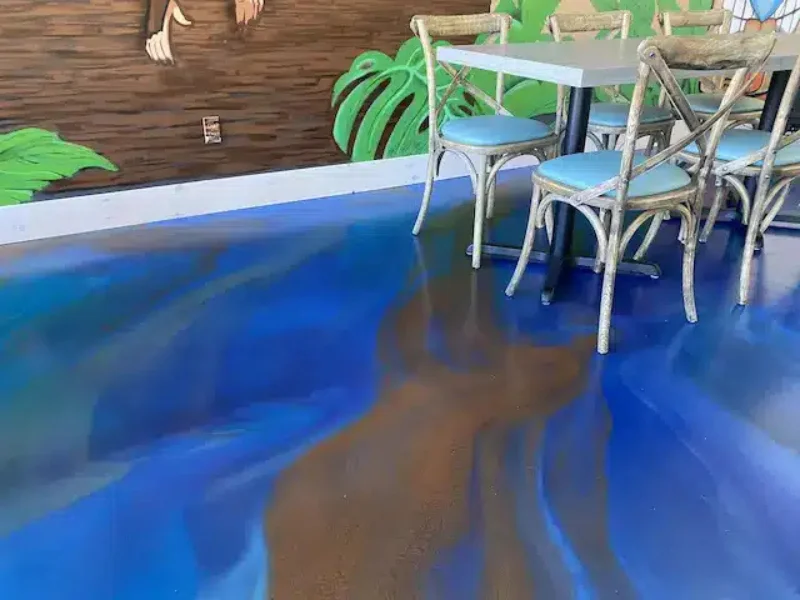
Broadcast flake or metallic pigments add color, depth and texture while providing a more forgiving surface for customer-facing areas, locker rooms and showrooms.
Best for: Customer-facing and appearance-driven spaces.
System 04
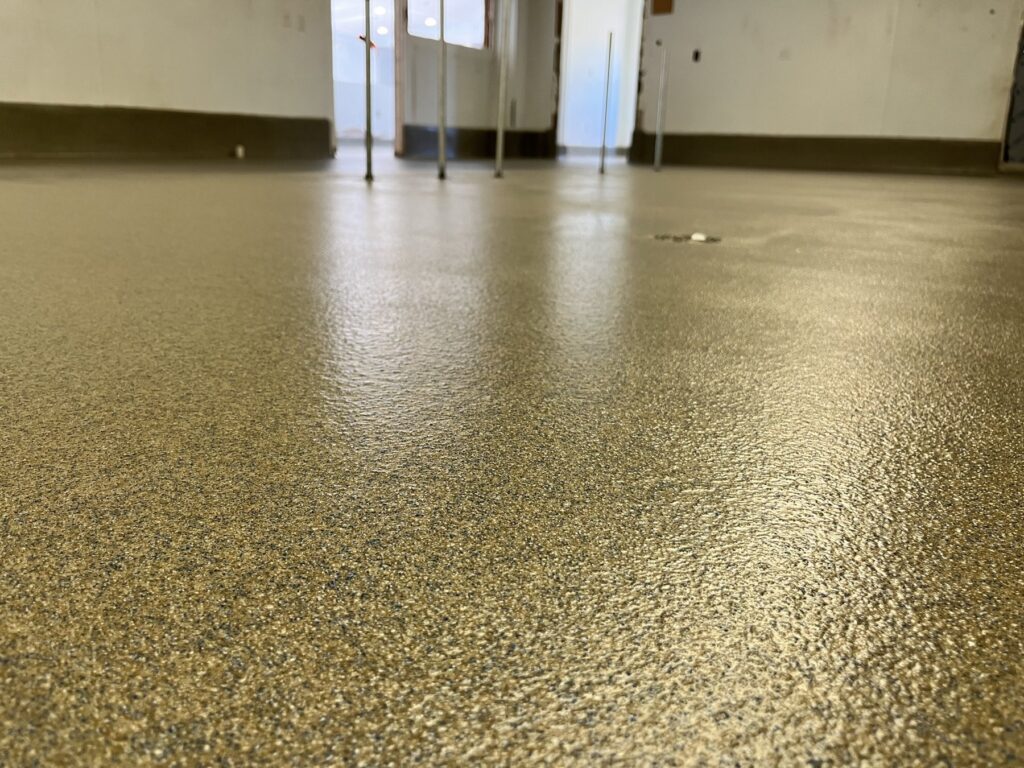
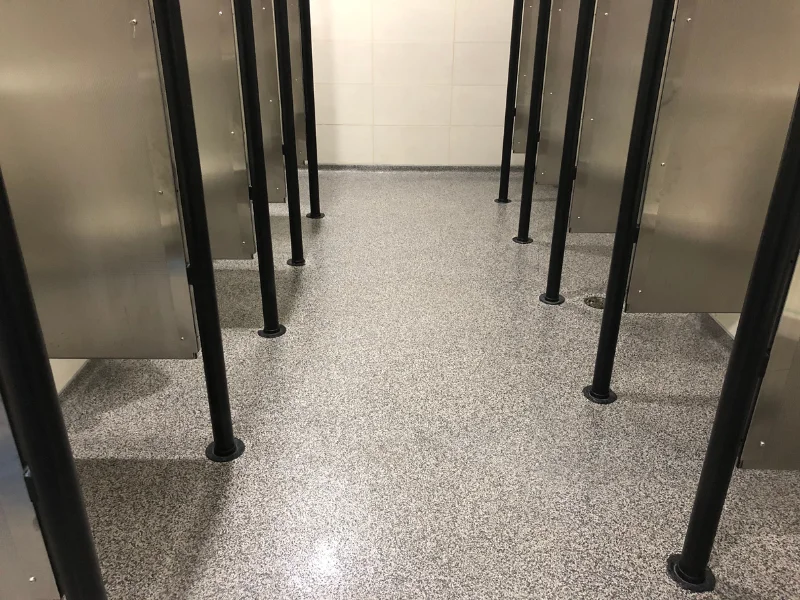
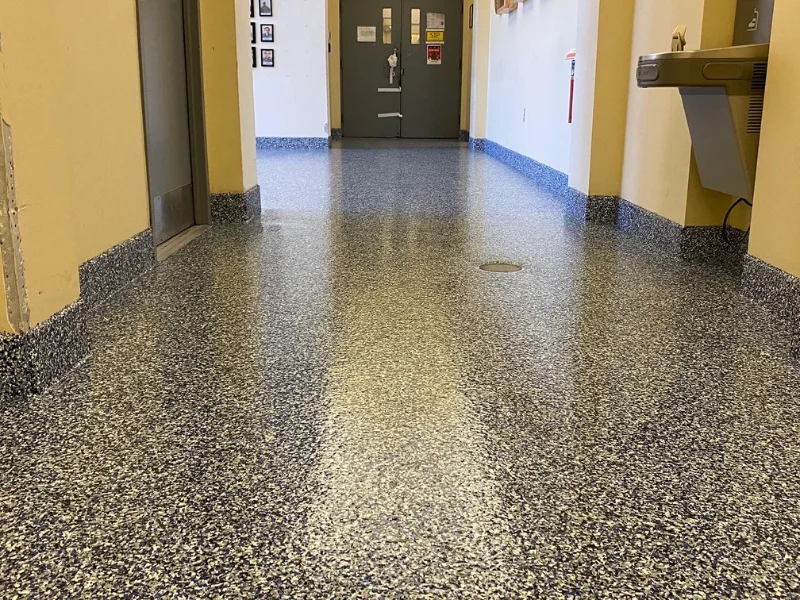
Colored quartz is broadcast into the resin to create a durable, textured, multicolor finish. It suits lobbies, showrooms, restrooms, locker rooms and other busy areas where appearance and traction both matter.
Best for: Busy areas that need both a finished look and traction.
System 05
Where hygiene is a priority, such as healthcare, food production and cleanroom-adjacent spaces, antimicrobial additives can be included in the system. We confirm the specific product and its claims for your project.
Best for: Facilities where hygiene is a priority.
System 06
Electronics assembly, laboratories and other sensitive areas may need a floor that controls static discharge. These systems are specified to a performance requirement and verified for the project.
Best for: Environments where static discharge must be controlled.
System 07
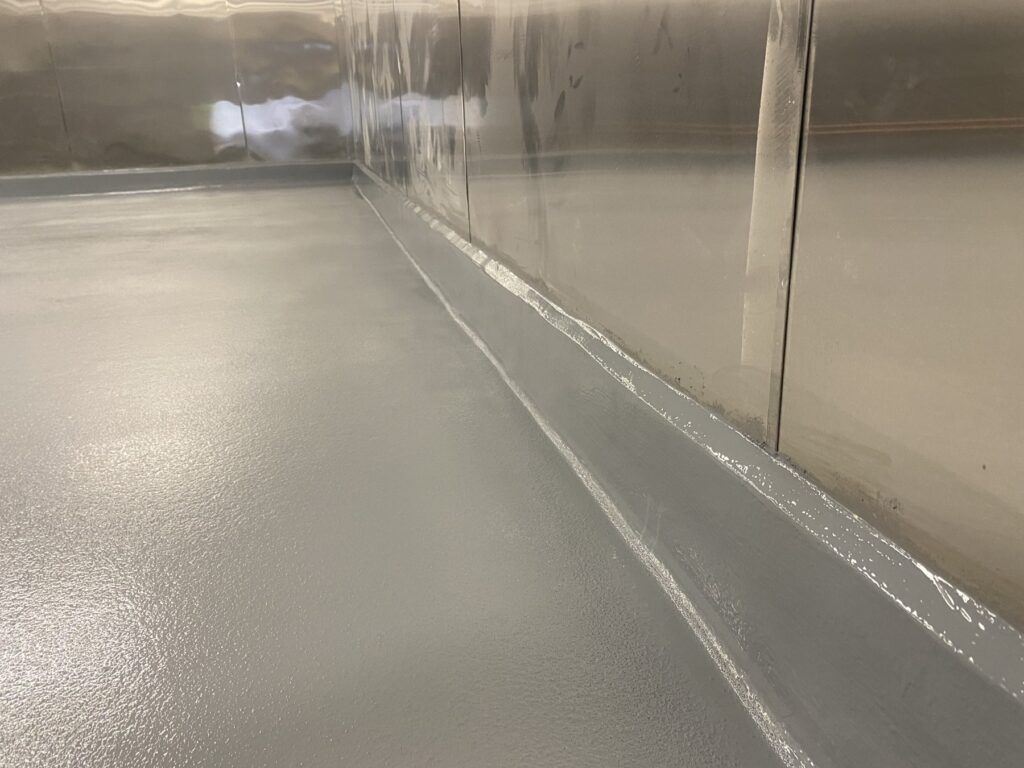
Where the project calls for it, an integral cove base creates a curved floor-to-wall transition that supports cleaning. Drains, joints, thresholds and equipment interfaces also need to be addressed in the scope.
Best for: Spaces that are washed down or cleaned often.
Preparation
The finished floor depends on the concrete beneath it. A new coating cannot correct an unsuitable substrate by itself.
Topcoat’s surface preparation capabilities include shot blasting, diamond grinding, coating removal and concrete repair. We select the preparation method for the slab and for the requirements of the flooring system.
Moisture also needs attention. A slab that looks dry can still put a coating at risk. If testing shows conditions outside the selected system’s limits, we address mitigation or an alternative system before proceeding.
Our Work
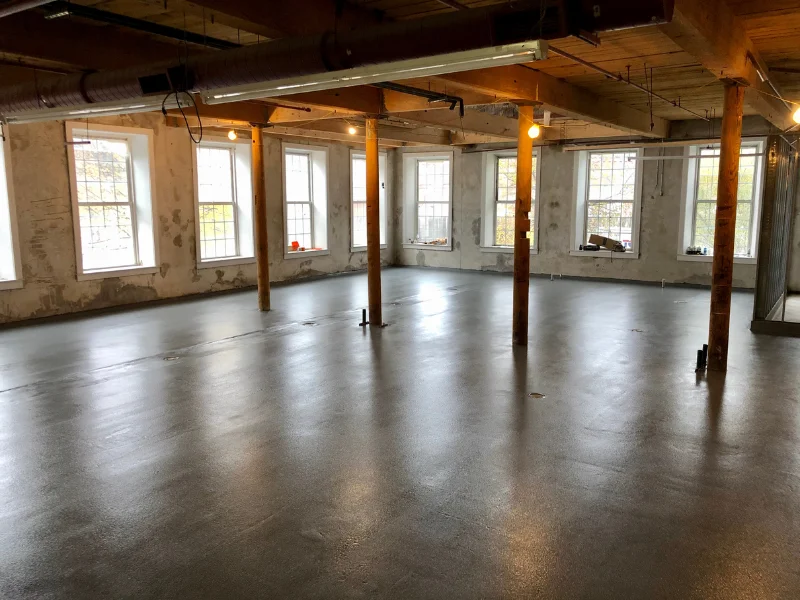
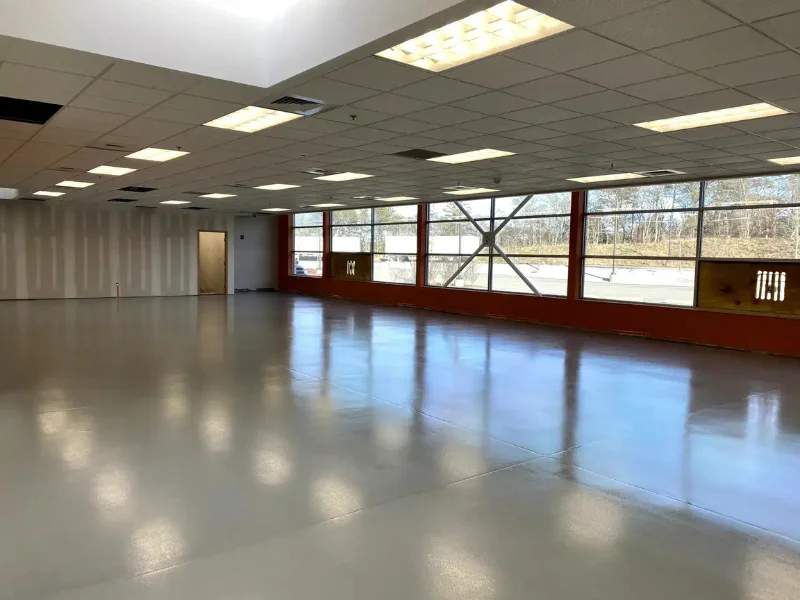
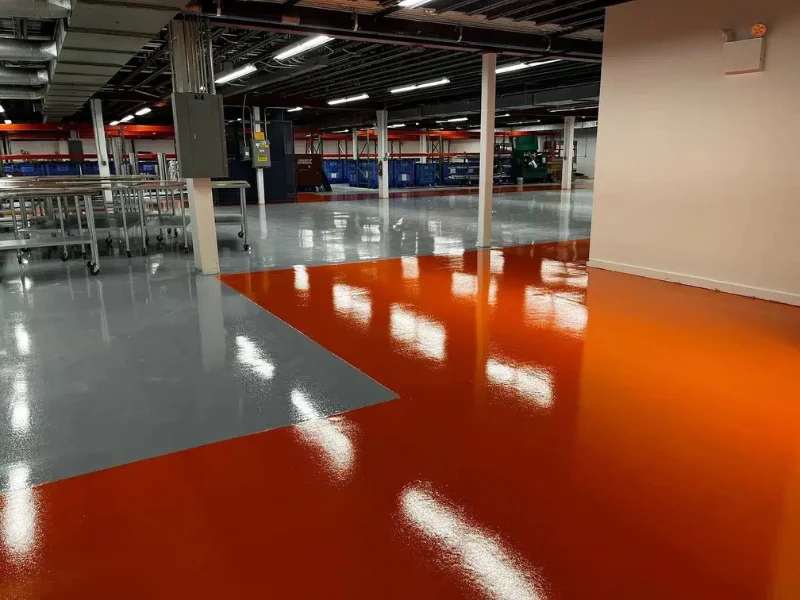
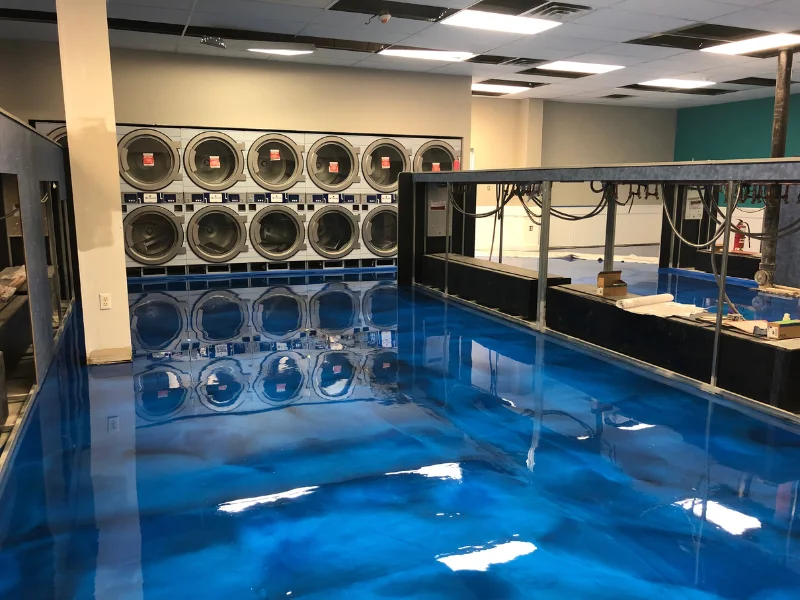
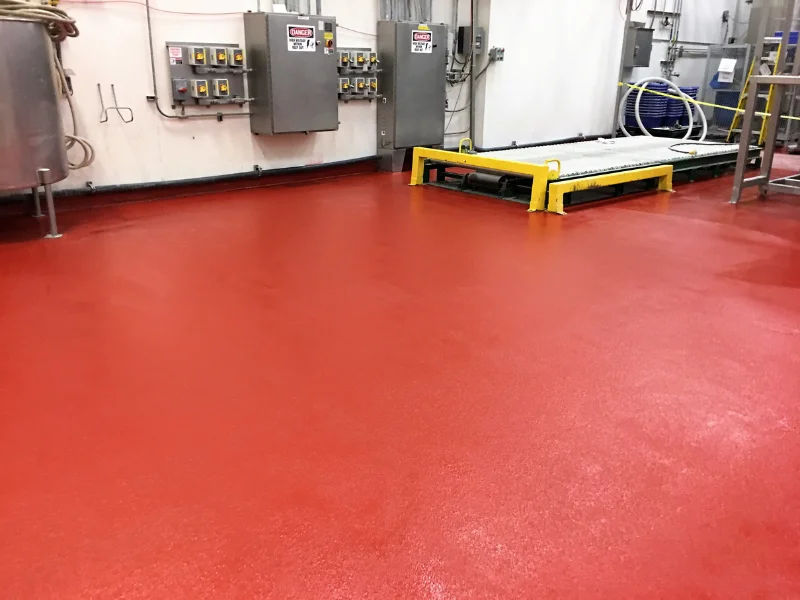
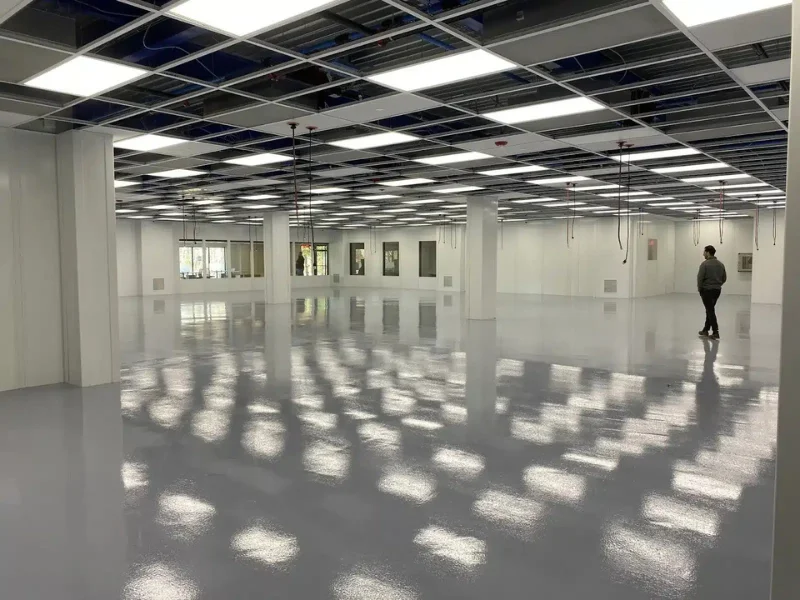
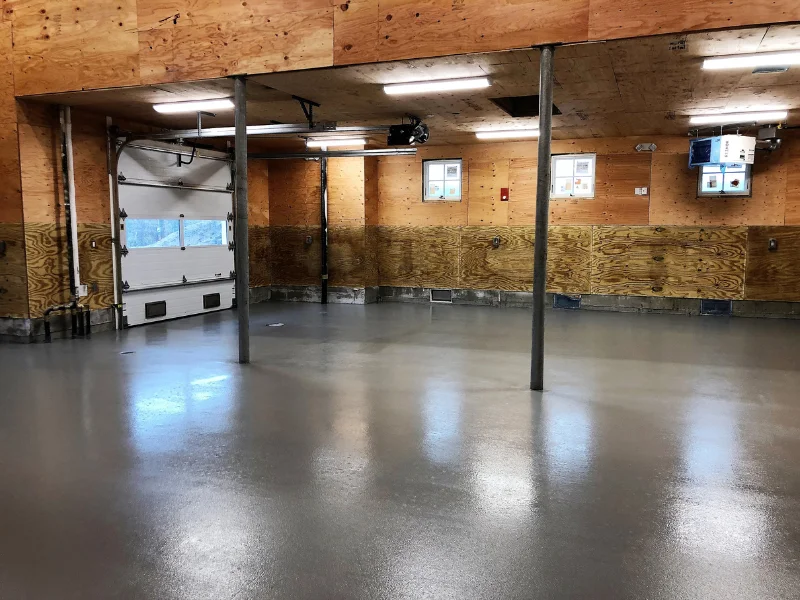
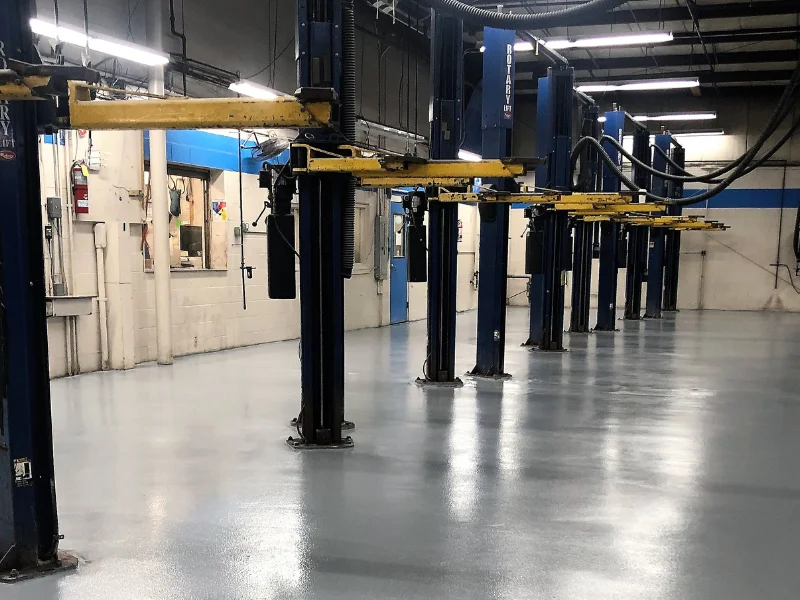
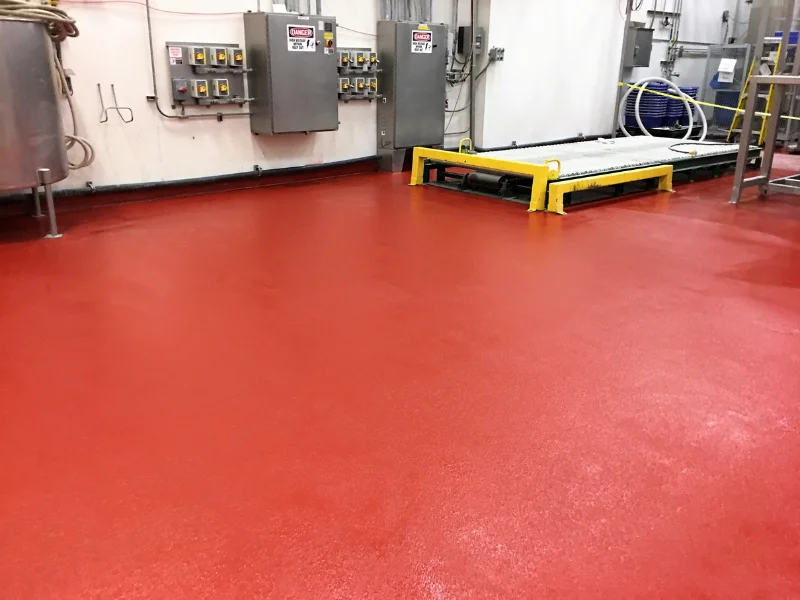
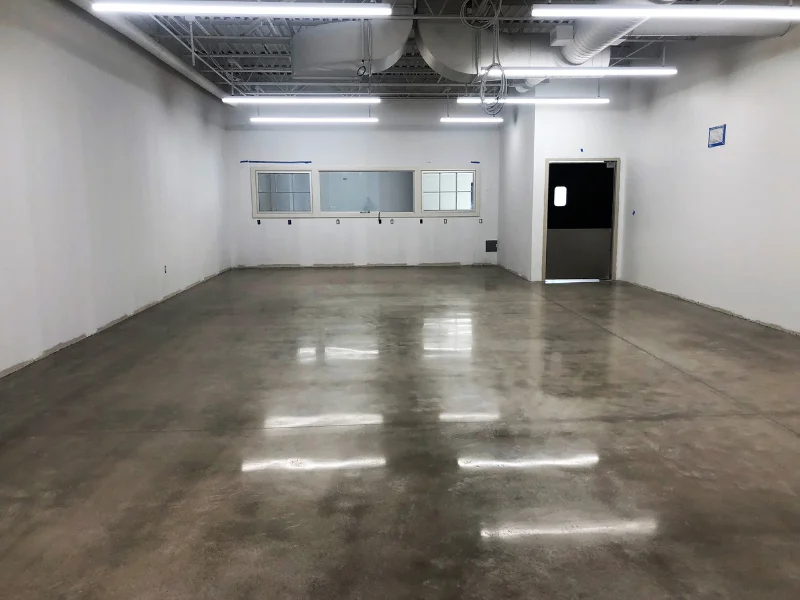
A sample of commercial and industrial floors we have installed, from seamless gray systems to decorative flake and metallic finishes.
Industries
We evaluate epoxy and other resinous flooring options for a wide range of facilities. Requirements can vary within the same building. A production floor, wash area and customer entrance may each need a different approach.
It depends on the heat, moisture, cleaning process and use of the space. Wet areas exposed to hot washdowns or temperature changes require particular attention to system selection. Urethane cement may be more appropriate for those conditions than a conventional epoxy coating.
Tell us how your kitchen operates so we can evaluate the available options.
Epoxy performs well in many settings, but it is not right for every floor. We will tell you if another system is a better match, especially in these cases:
Related options include urethane cement, polyaspartic coatings, MMA systems and moisture mitigation, which we can review with you.
Our Process
We review the existing conditions, intended use and installation constraints, and we test the concrete where needed.
The proposal identifies the preparation and flooring work, along with repairs, cove base and finishes where applicable.
The concrete is prepared and the specified system is installed in sequence, with attention to substrate, drainage, transitions and application requirements.
Reopening depends on products, temperature, sequence and type of use. Foot traffic, equipment and chemical exposure can each have different cure needs.
We walk the finished floor with you, review maintenance guidance for the installed system, and stay available for questions.
Square footage is only part of the price. Coating removal, concrete repairs, moisture mitigation, system thickness, cove base, finish requirements and access restrictions can all change the scope.
When comparing proposals, look at the complete installation: preparation, materials, included details and the return-to-service plan. A useful estimate explains what your facility needs and what the price covers.
For a project-specific proposal, share your location, approximate floor area, current floor condition and preferred installation window.
Topcoat is a family-owned flooring contractor led by the Hunt family. Our approach brings concrete preparation, flooring selection and installation planning into the same conversation.
We help you understand the choices that affect your floor, from the existing slab to the finish your team will work on every day. Our goal is a practical recommendation grounded in the needs of your facility.
FAQ
Sometimes. The existing coating’s adhesion, condition and compatibility must be evaluated first. Removal may be necessary where the coating is failing or unsuitable for the new system.
Slip resistance depends on the finish, texture, contamination, footwear and maintenance. Texture should be selected for the way the area is used and cleaned; a glossy appearance alone does not establish slip performance.
Properly prepared, installed and maintained epoxy floors can last 10 to 20 years or more. Actual service life depends on traffic, exposure, the system installed and how the floor is cared for, and we can talk through realistic expectations for your facility.
Most projects take about 3 to 5 days including surface preparation, with the epoxy curing in roughly 48 to 72 hours. Floor area, repairs, the specified products and site conditions can change that, and we plan the schedule around your operation.
Seamless, sealed floors are easier to clean than jointed or porous surfaces, which is why they are common in these settings. The right system depends on your cleaning process, temperatures and any regulatory requirements, so we review those with you.
An ordinary epoxy floor should not be assumed to provide moisture mitigation. Testing and system requirements determine whether a separate mitigation step or a different flooring approach is needed.
Follow the maintenance guidance for the installed system, including appropriate cleaners and equipment. Remove abrasive debris and spills promptly, and review cleaning procedures for textured areas.
Yes. Our installations carry a workmanship warranty of 1 to 5 years, depending on the system installed and the project scope. We will confirm the exact terms for your project in the proposal.
Coverage
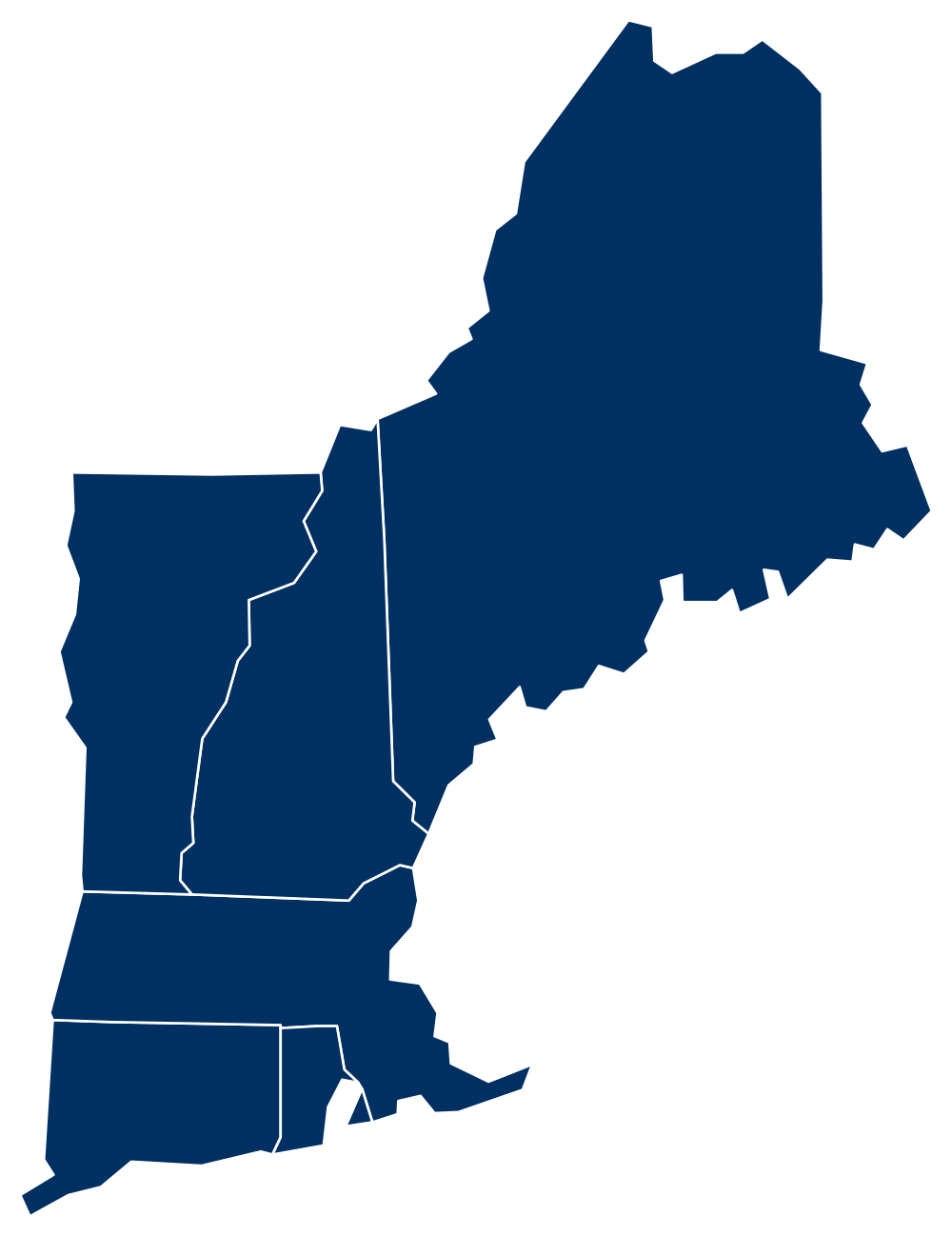
We install commercial and industrial floors across Massachusetts, Rhode Island, Connecticut, New Hampshire, Vermont and Maine, including Cape Cod, the South Shore, Greater Boston, MetroWest, Southeastern Massachusetts and the South Coast.
Planning a new installation or dealing with a worn, peeling or difficult-to-clean floor? Tell Topcoat about your facility and what needs to improve.
Call: (774) 470-4951 · Email: info@topcoatservices.com