From customer-facing sales floors to wet preparation areas and stockrooms, Topcoat selects flooring around the demands of each space. We prepare existing slabs, install appropriate systems and coordinate the work around store access, other trades and reopening requirements.
Retail and grocery flooring must accommodate customer traffic, carts, cleaning and the conditions in each department. A sales floor, food preparation room and receiving area may need different systems. Topcoat evaluates the existing slab and operating requirements before recommending polished concrete, resinous flooring or a polishable overlay.
| Store area | Options to evaluate | Main considerations |
|---|---|---|
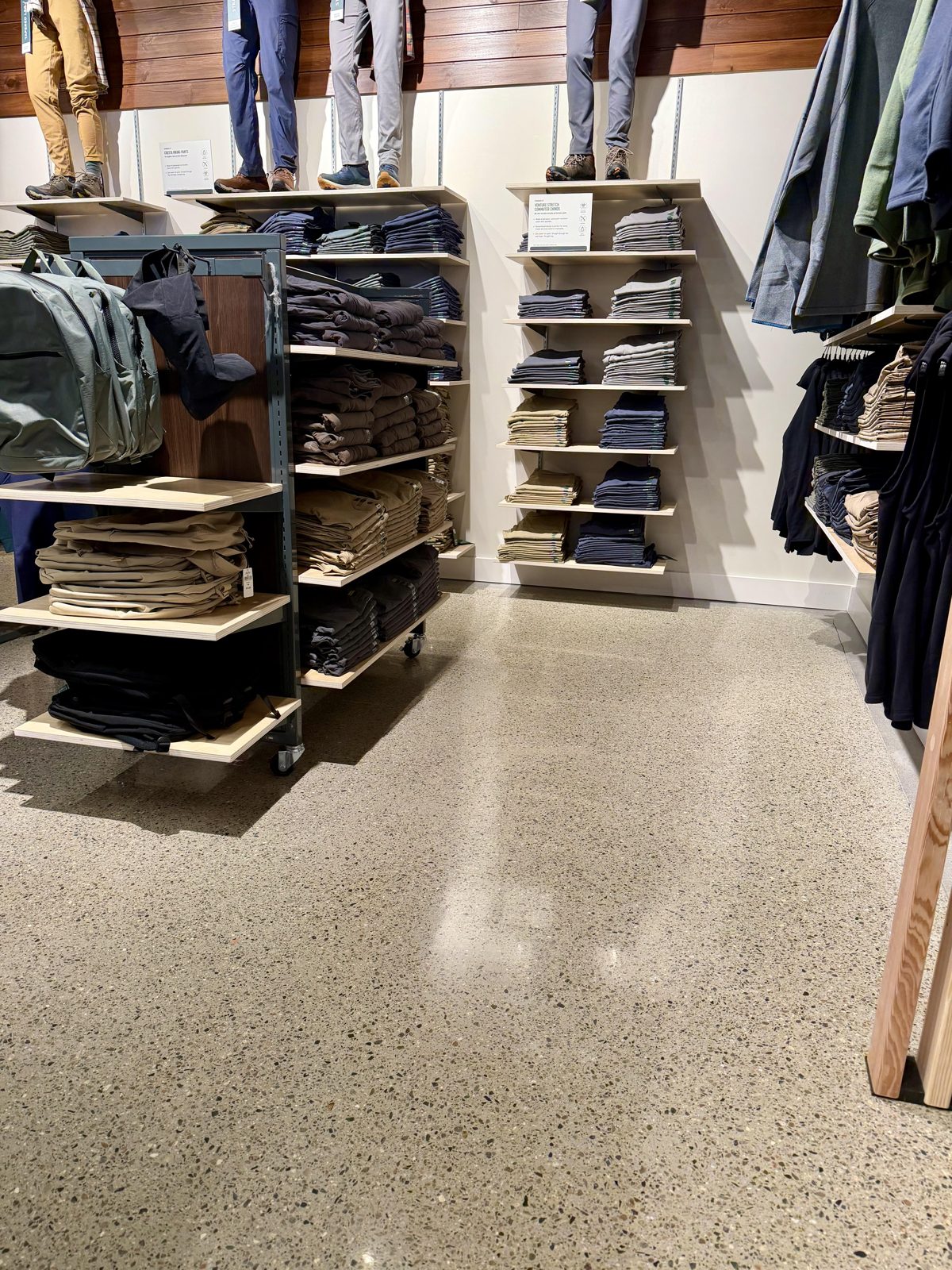
| Sales floors and showrooms | Mechanically polished concrete; polishable overlays; suitable decorative resinous systems | Appearance, slab condition, carts, cleaning and maintenance |
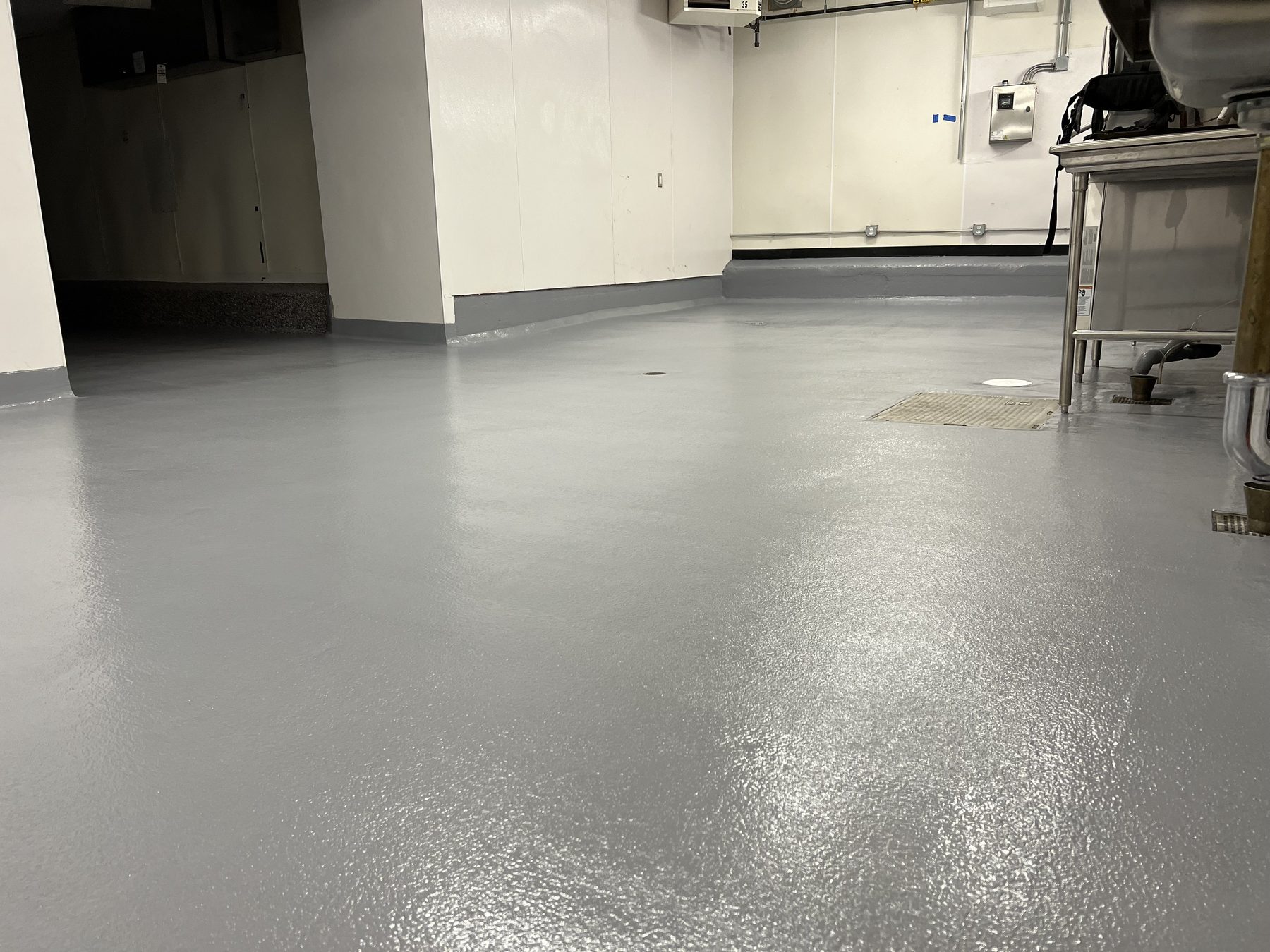
| Grocery food-preparation areas | Urethane cement | Water, cleaning temperatures, grease, texture, cove and drains |
| Stockrooms and receiving | Epoxy, urethane cement or mechanically polished concrete | Rolling loads, joint condition, impact and exposure |
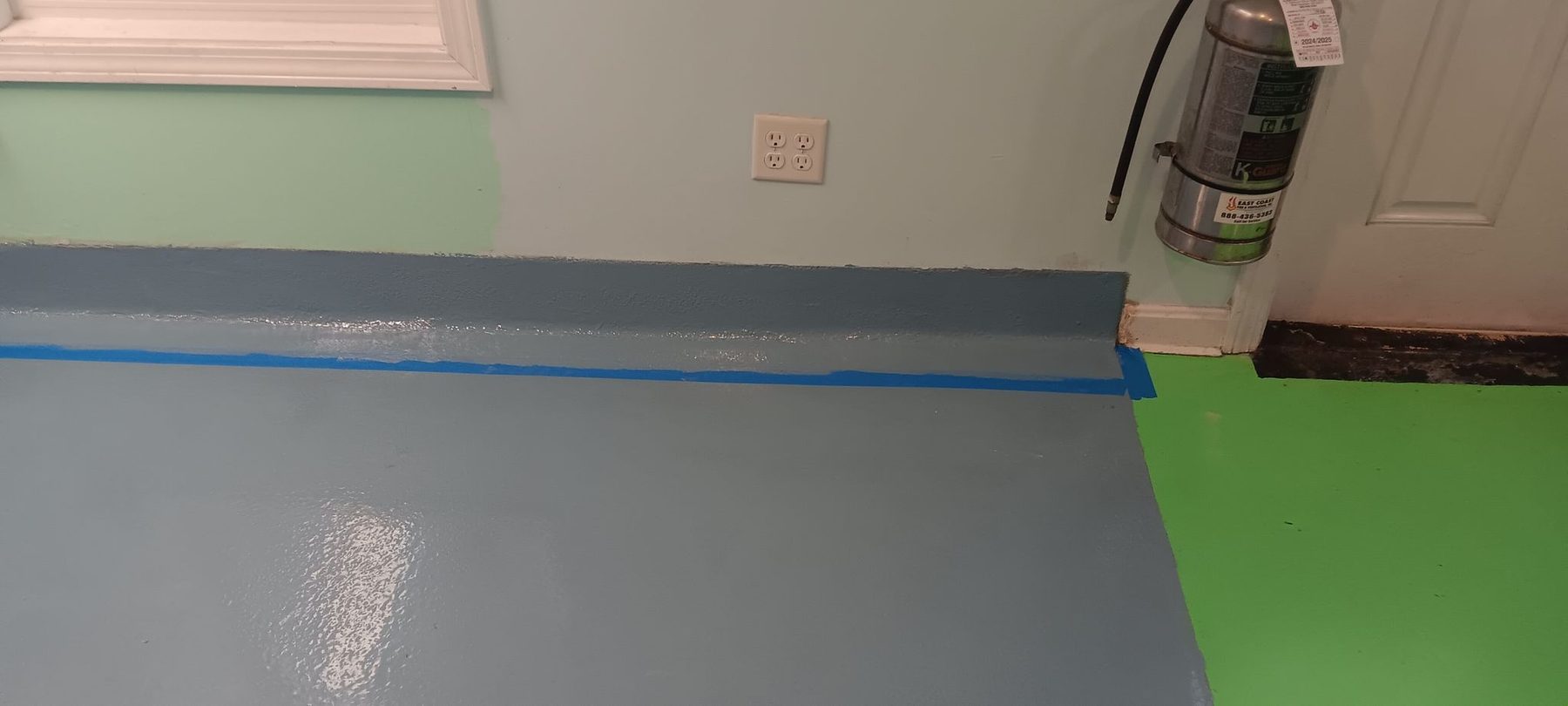
| Restrooms and support areas | Suitable urethane cement or resinous systems | Cleaning, moisture, transitions and floor-to-wall details |
| Coolers and freezers | Systems specified by the manufacturer for the actual conditions | Operating and installation temperatures, substrate and transitions |


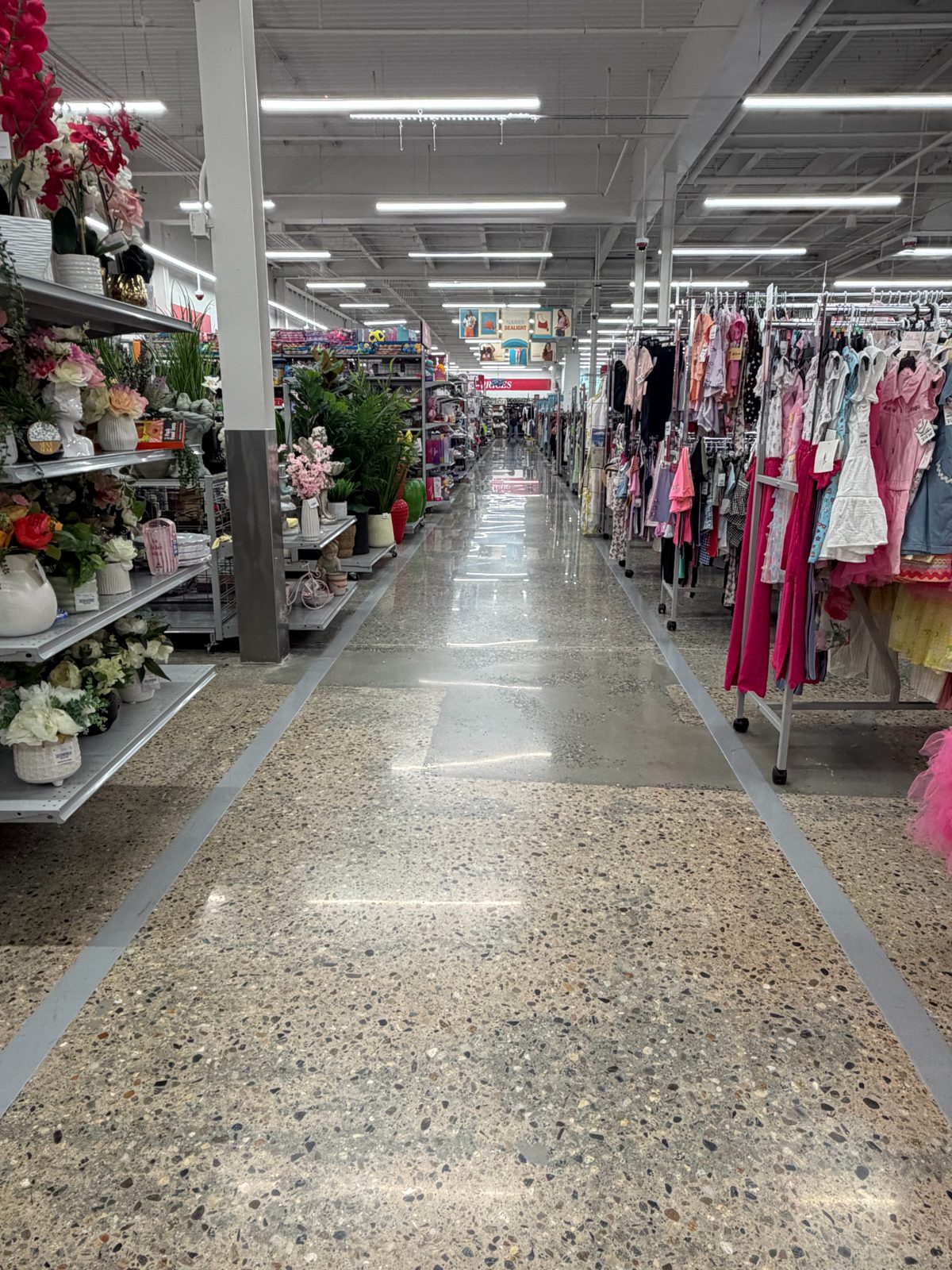
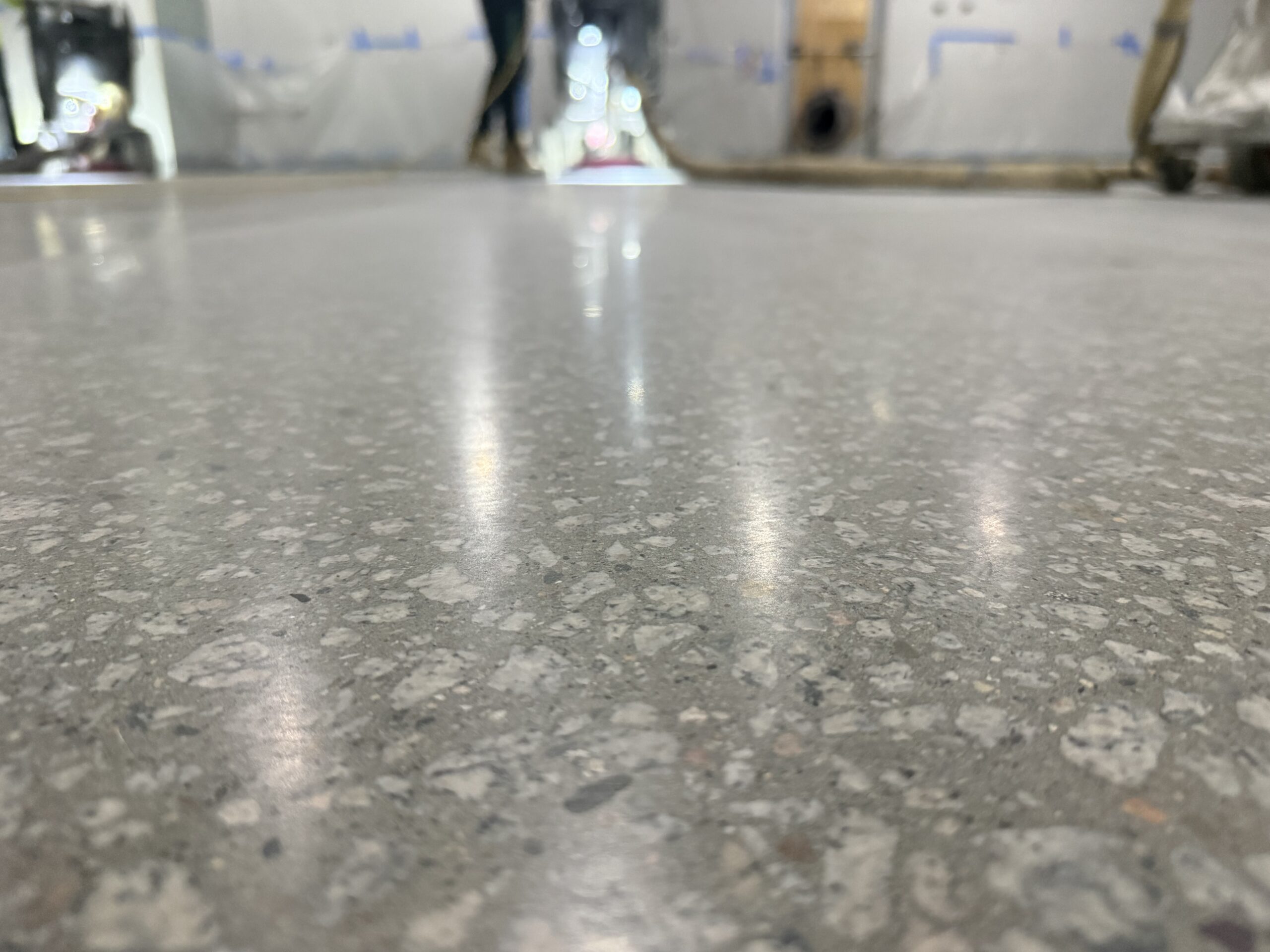
Framingham, MA · Retail sales floor


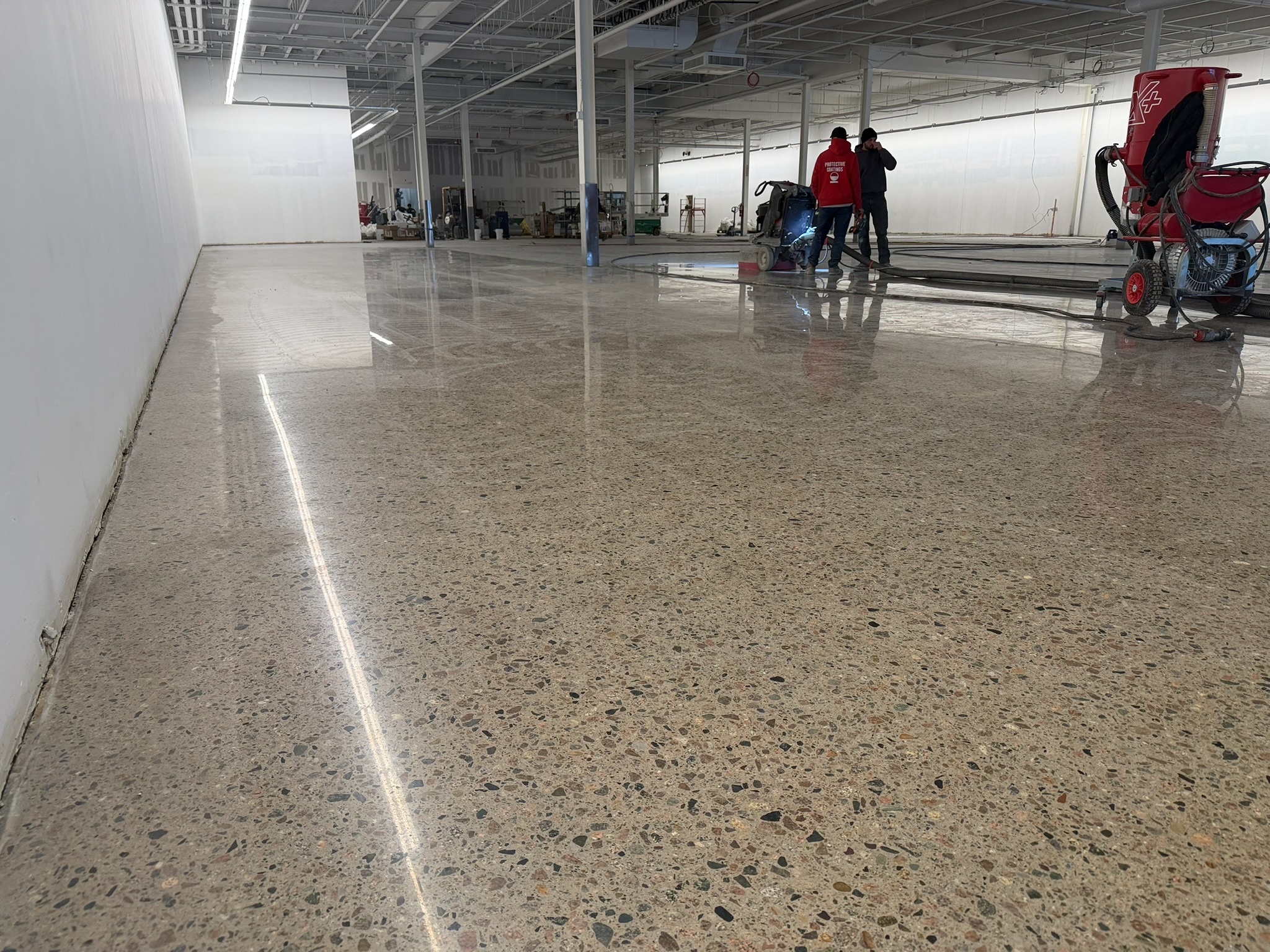
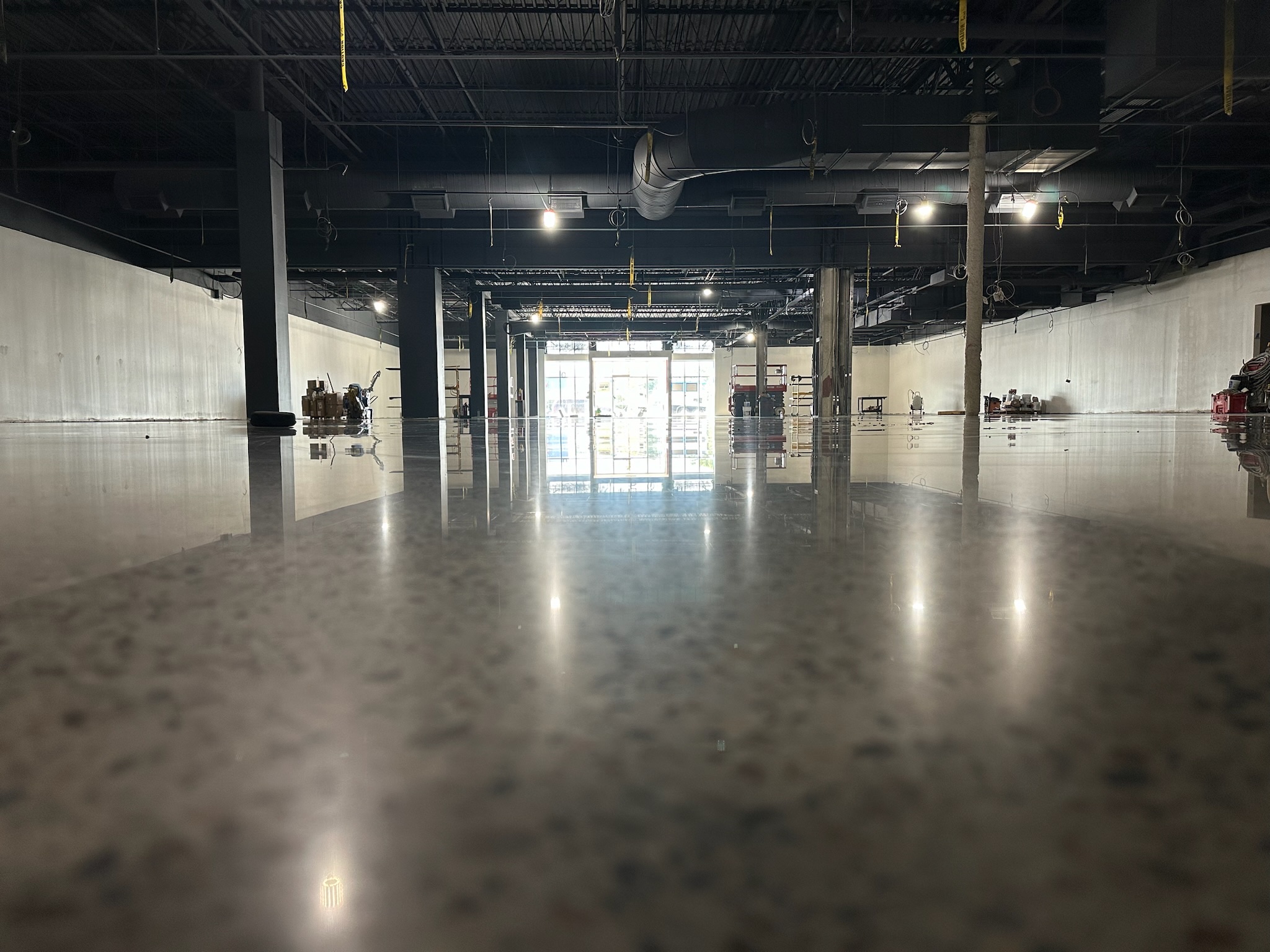
Walpole, MA · Retail store


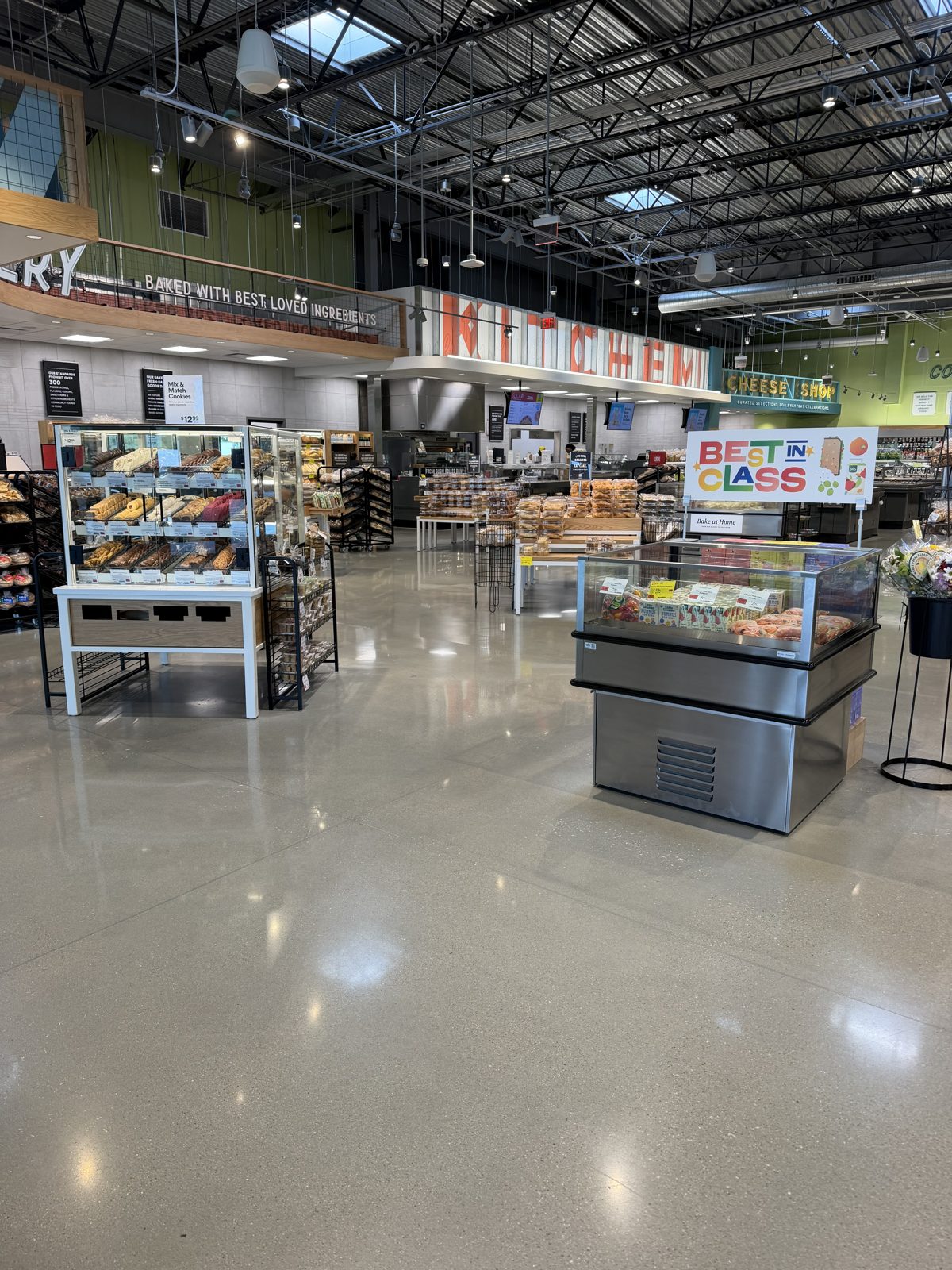
Seekonk, MA · New grocery store
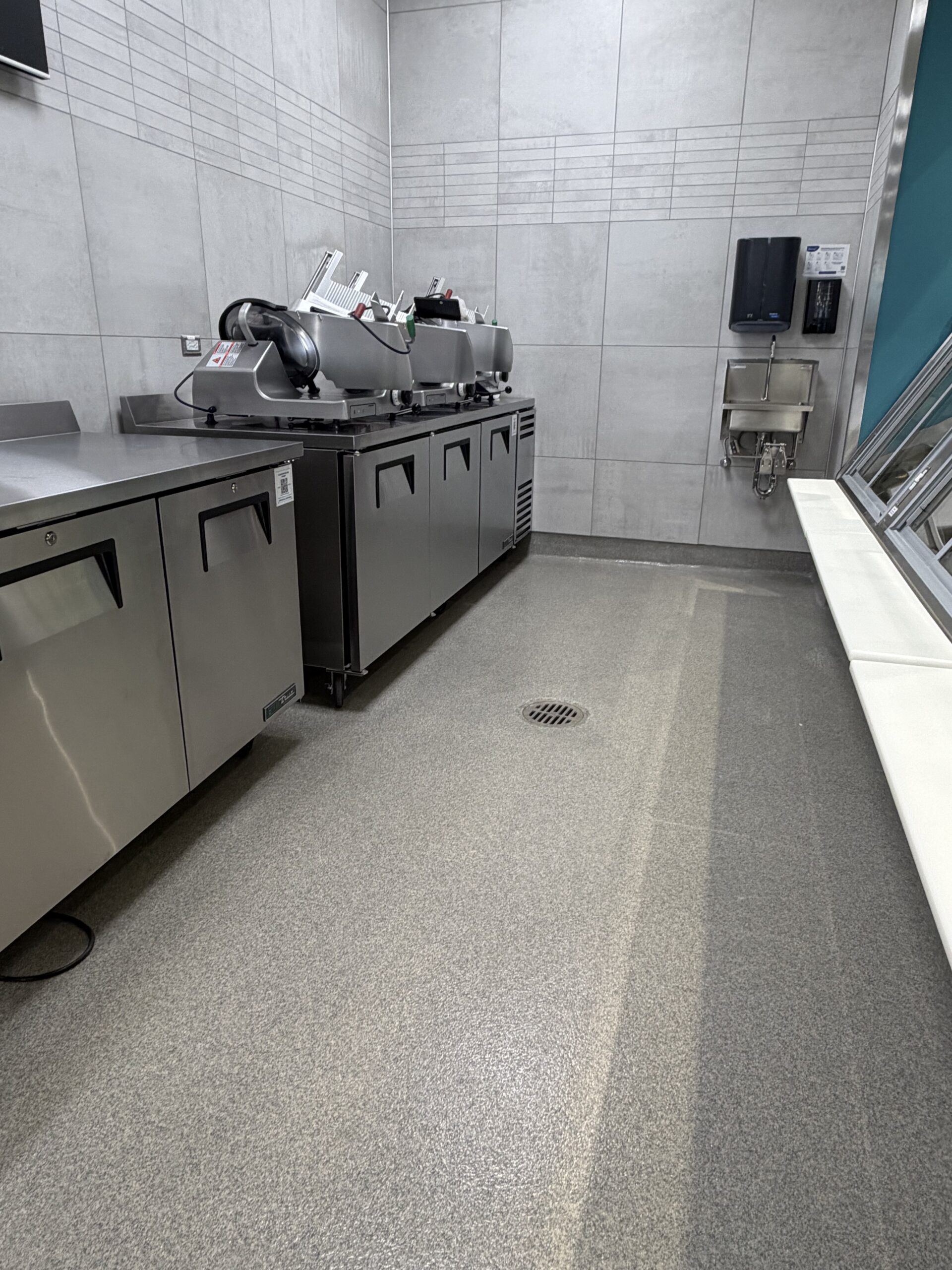
Urethane cement systems · Polished concrete · Commercial kitchen flooring
Cheshire, CT · Grocery store
Framingham, MA · Market and convenience store
Each system below has its own service page with full details. This section covers where each one fits in a store.
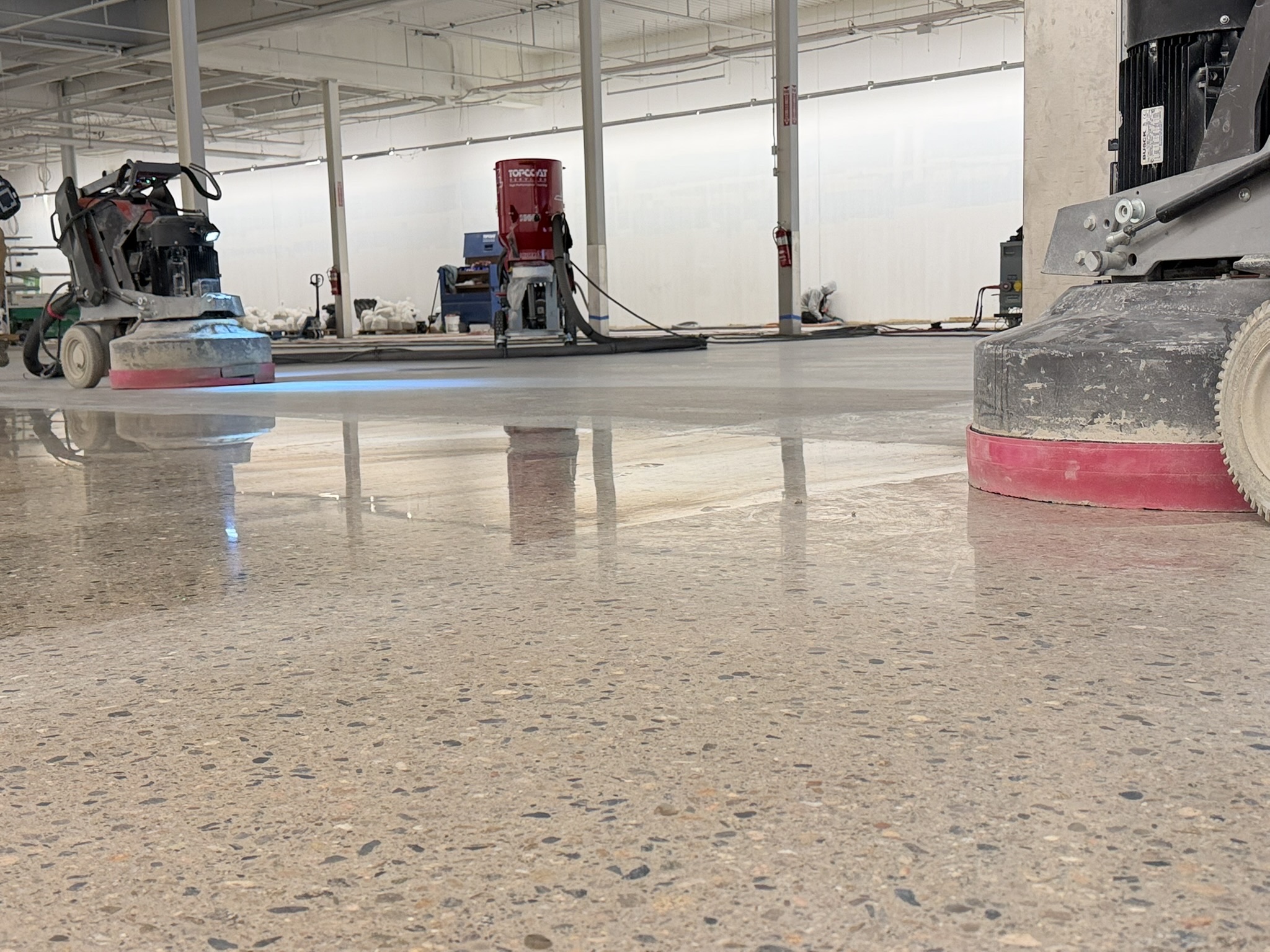
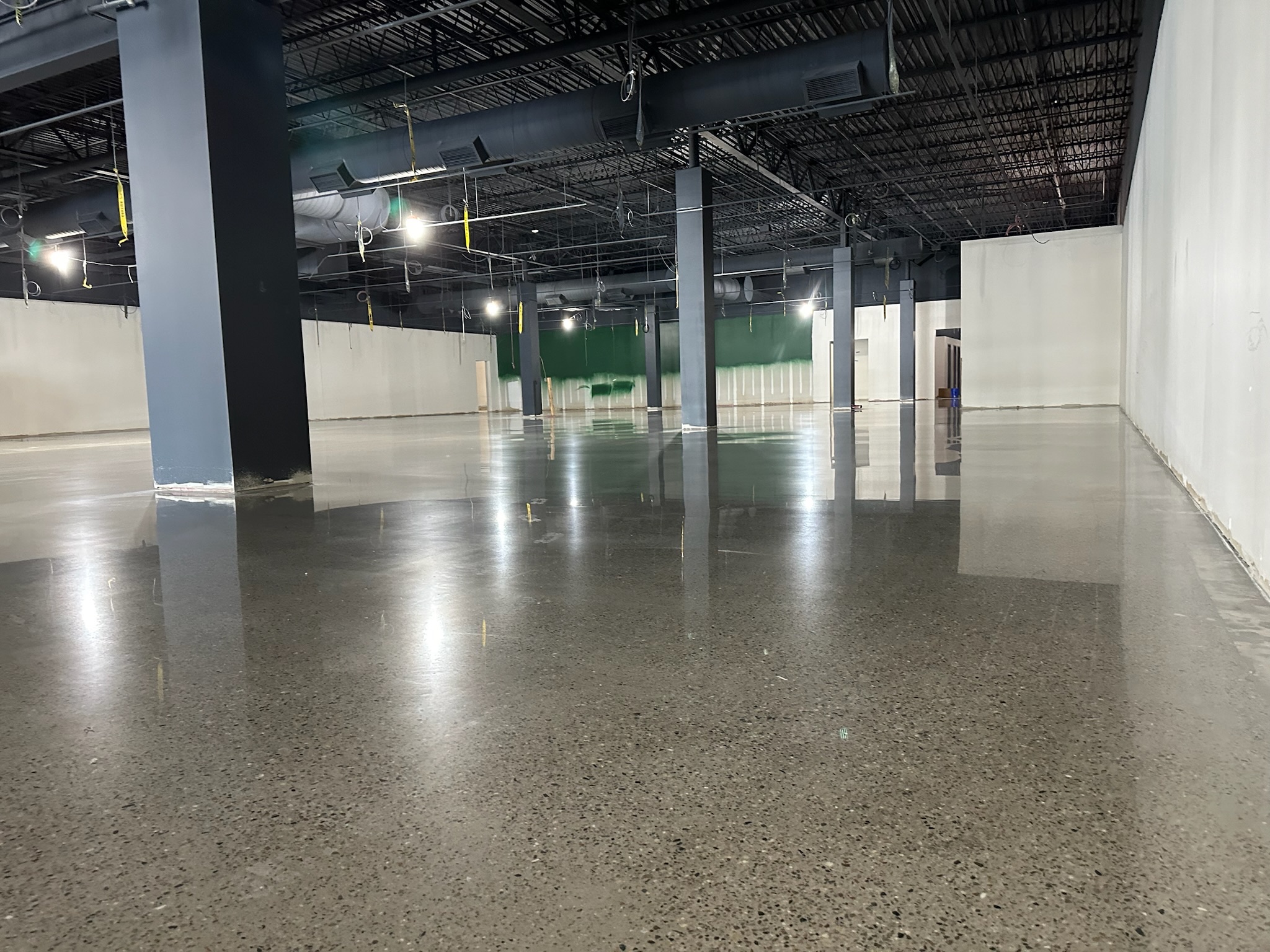
We grind and polish the slab in progressive steps, completing repairs, grouting and densification where the project specifies them. Aggregate exposure and sheen are separate choices: how much stone shows is set during grinding, and the level of shine is set during polishing.


Where the existing slab alone cannot deliver the finish a store wants, a polishable overlay or cement terrazzo can be placed and then ground and polished. Overlays still need suitable substrate preparation, repairs and joint and edge detailing.
Grocery preparation rooms see water, hot cleaning, grease and frequent washdowns. Urethane cement is often evaluated for these areas, with integral cove, drain details and transitions to adjacent floors planned into the scope. Texture is selected for the cleaning program and conditions in each room.


Epoxy and other resinous systems can suit stockrooms, support spaces and decorative applications. Slab moisture, chemical and cleaning exposure, required texture and traffic all affect which system is suitable.
Topcoat owns its grinders, shot blasters and dust-extraction equipment.
We remove unsuitable coatings, adhesives and weak material to reach a sound substrate.
We investigate the slab and carry out testing as the project requires.
We complete compatible repairs and joint detailing before the finish goes down.
We detail transitions between departments and between flooring systems.
We coordinate with fixtures, shelving, refrigeration equipment and other trades.


When a store stays open, we plan the work with the owner or general contractor around the reopening requirements for each area.
We agree the areas to be worked and the order they are completed in.
We plan access for crews, equipment and materials around store traffic.
We plan protection for merchandise and food areas next to the work.
We plan ventilation for the selected system and clean up before handover.
Cost depends on the floor area, removal of existing materials, repairs, the system and finish selected, integral cove, drains, access and phasing. We price each project after an assessment.
Our commercial floor cost guide covers coatings. Coating prices do not automatically apply to polished concrete or overlays, which are priced on their own scope.
Every floor needs a cleaning program suited to the system, the finish and the traffic. We provide cleaning guidance for the system installed, and polished concrete has its own routine.
It depends on the area. Sales floors and showrooms often suit mechanically polished concrete, a polishable overlay or a decorative resinous system. Stockrooms, restrooms and prep areas may need different systems. We assess the slab, traffic and cleaning program in each area before recommending one.
Often, yes. At L.L. Bean in Framingham and Burlington in Walpole, we removed existing materials, repaired the slab and mechanically polished the concrete, so the planned overlays were not needed. Whether a slab can be polished depends on its condition, which we check first.
An overlay is considered when the existing slab cannot deliver the finish the store wants, for example because of heavy patching, damage or a decorative goal such as cement terrazzo. The slab still needs suitable preparation and detailing before the overlay is placed.
Prep areas with water, hot cleaning, grease and frequent washdowns are often a fit for urethane cement. Integral cove, drains, texture and transitions are planned into the scope with the system selected.
Yes, in many cases. We plan work zones, access routes, protection and the order of areas with the owner or general contractor. How the work is phased depends on the store layout, the system and its cure, and the reopening date for each area.
We consider the cleaning method, the water, grease and soils present, foot and cart traffic, and the system manufacturer’s texture options. More texture can help in wet conditions but can be harder to clean, so we review the choice with the store before installation.
Return times depend on the system, its thickness, the temperature and the manufacturer’s cure data. Polished concrete has no coating cure, while resinous systems and overlays need set cure periods. We confirm return times for each area in the proposal.
The main factors are the area, removal of existing materials, repairs, the system and finish, integral cove, drains, site access and phasing around operations. We price each project after an assessment, and coating prices do not automatically apply to polishing or overlays.
Send the store location, the areas involved, approximate square footage, the current flooring and the dates the store can give you access.
Call (774) 470-4951 or email info@topcoatservices.com. Topcoat Services, 105 Ferndoc Street, Suite F, Hyannis, MA 02601.