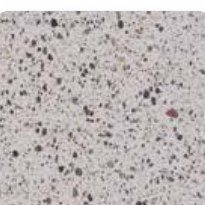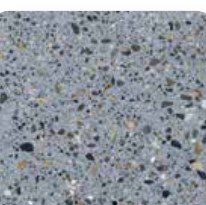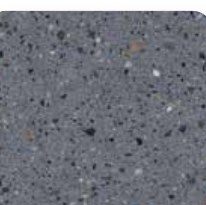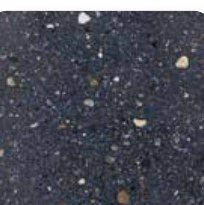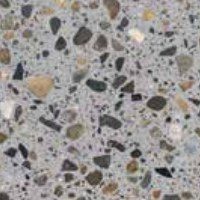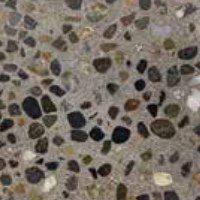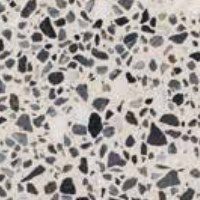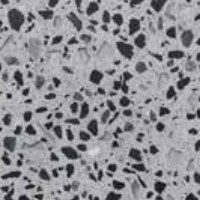
Polishable Overlays & Cement Terrazzo Across New England

A new surface. A finish developed through mechanical polishing.

Topcoat Services installs polishable overlays and cement terrazzo for commercial interiors across New England. We coordinate substrate preparation, material placement and mechanical finishing to create floors defined by their aggregate, color and reflected appearance.

For architects, designers, owners and general contractors, we help connect the finish concept with the preparation and installation it requires.

Preparation through polishing

One coordinated installation scope.

Aggregate and color

Explore options available within the selected system.

Samples before selection

Establish the intended finish direction.

Architectural details

Plan joints, transitions and finished elevations.

What Are Polishable Overlays and Cement Terrazzo?

Polishable Overlays

A polishable overlay is a new cementitious topping installed over a suitably prepared substrate and mechanically ground and polished as the finished floor. It provides a new surface where the existing slab cannot deliver the intended appearance or where the design calls for a selected topping. Topcoat installs polishable overlay systems including Ardex K523 and TRU PC, selected to suit the substrate and design.

Only materials designed for this use should be specified. An ordinary floor-leveling underlayment is not automatically suitable as an exposed polished finish.

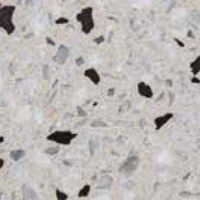
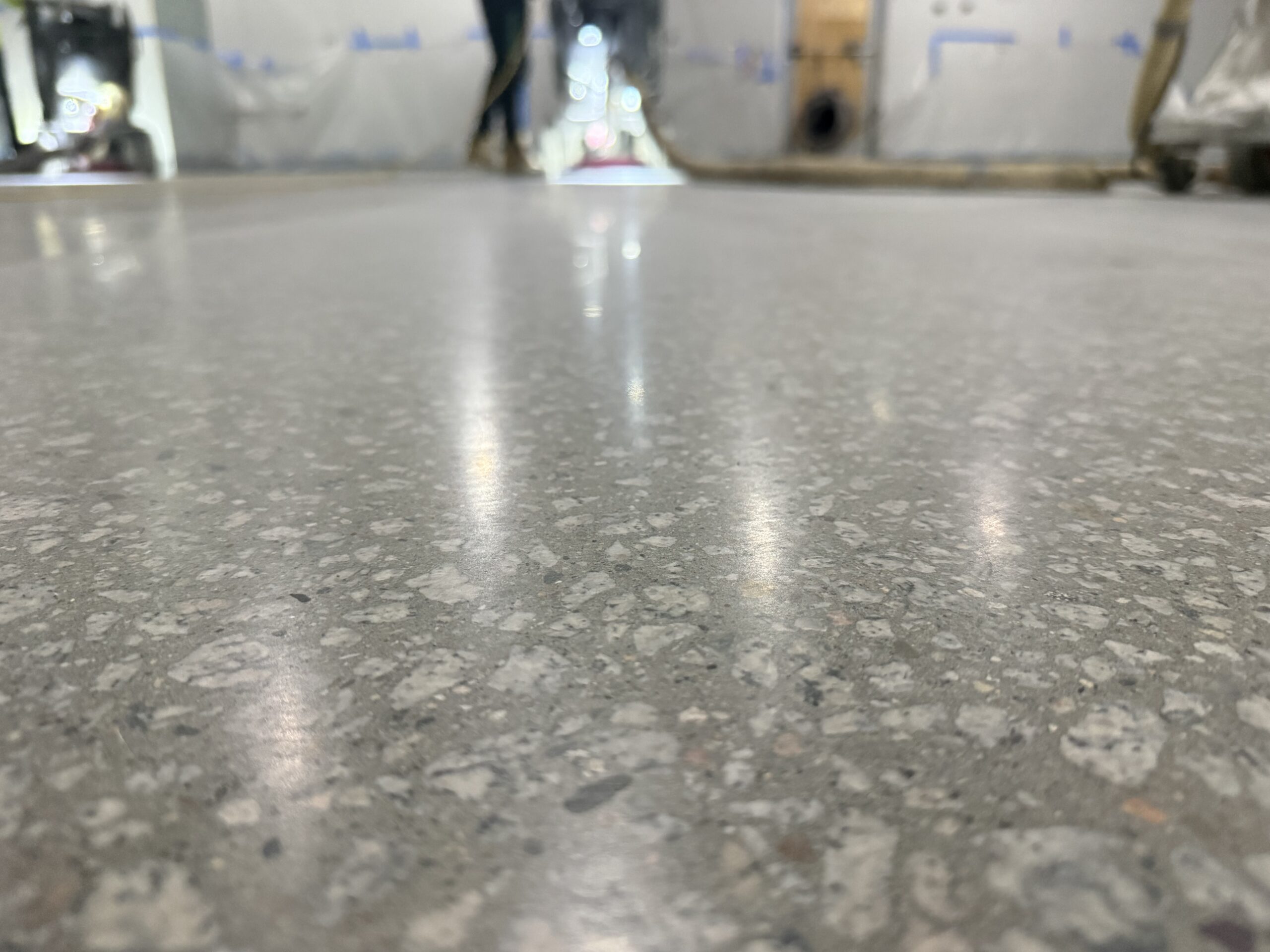
Close-up of polished cement terrazzo floor with exposed aggregate
Polished cement terrazzo, aggregate close-up

Cement Terrazzo

Cement terrazzo combines a cement-based matrix with selected decorative aggregate. Grinding and finishing expose the aggregate and develop the finished surface.

The available aggregate, color, assembly and finish depend on the specified system. Samples and project details establish what Topcoat will install.

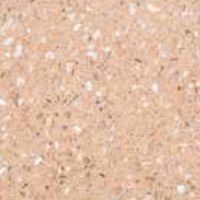
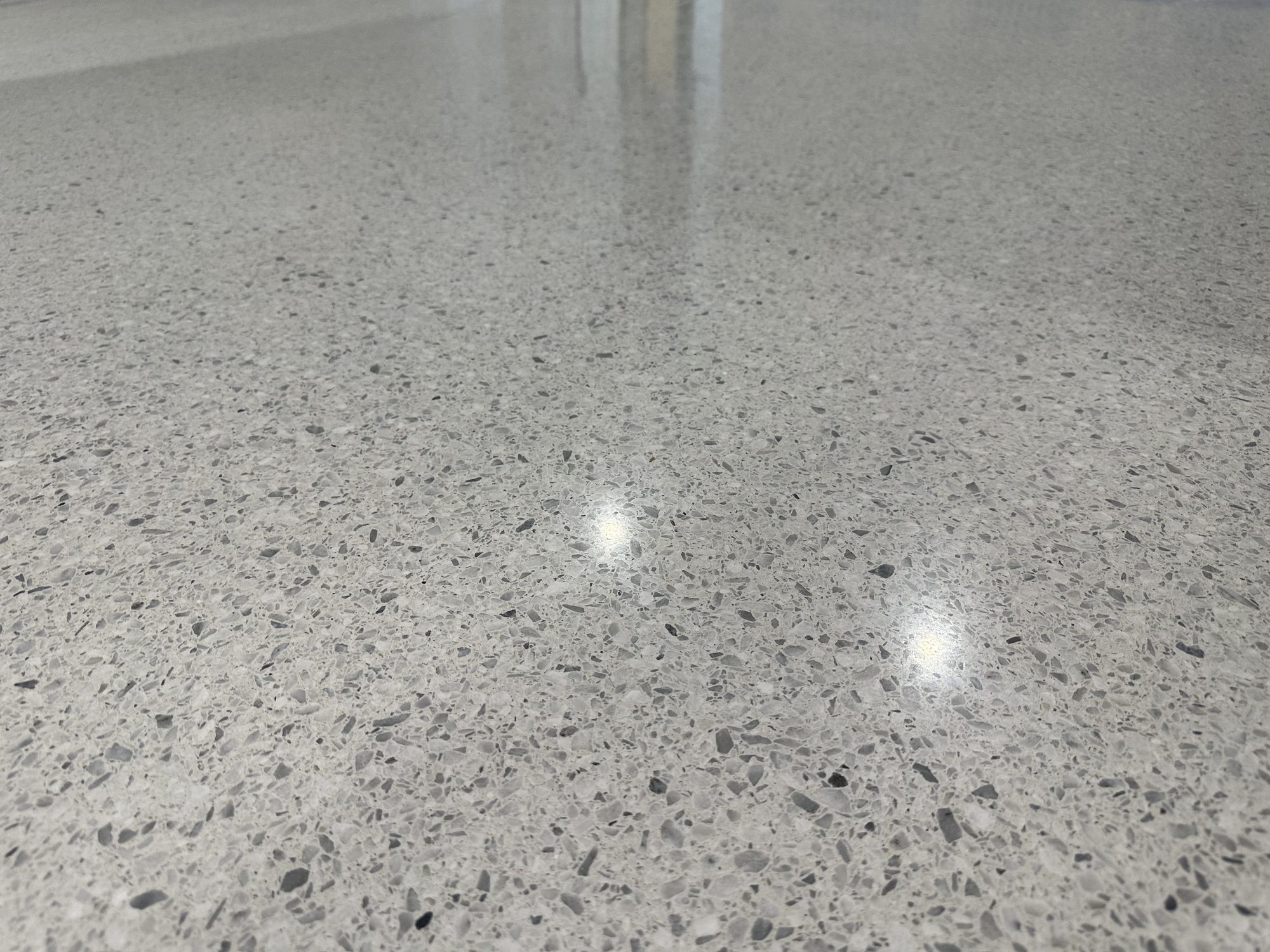
Close-up of polished cement terrazzo with fine aggregate, Ardex cementitious terrazzo, Hyannis office
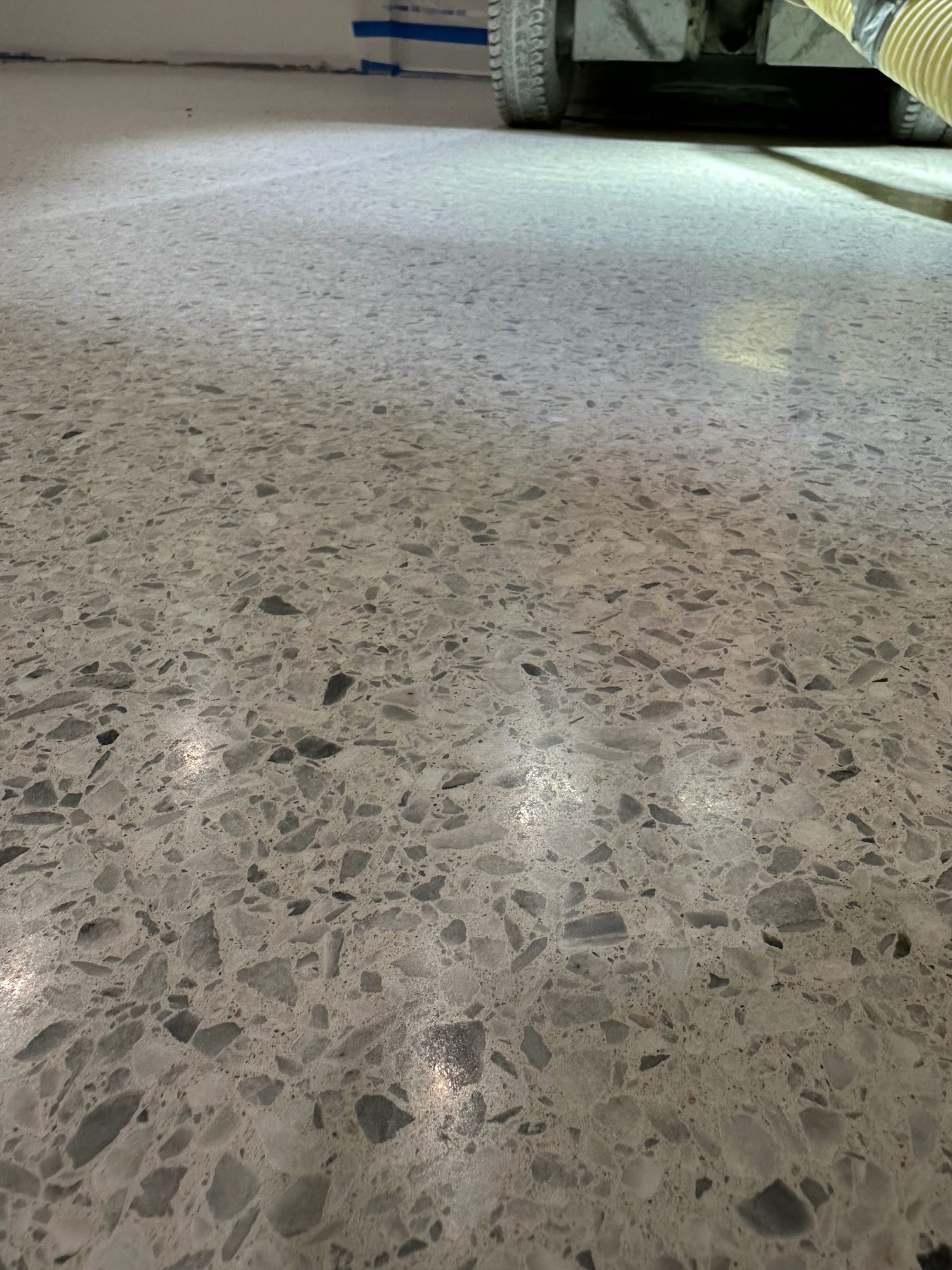
Fine aggregate in polished cement terrazzo, Ardex cementitious terrazzo, Hyannis office
Choose the Surface Around the Design

ApproachWhat forms the finished surface?Main planning considerations
Existing-slab polished concreteThe original concrete is mechanically refinedSlab condition, existing aggregate, repairs and variation
Polishable overlayA new topping is placed and mechanically finishedTopping selection, preparation, thickness, elevations and appearance
Cement terrazzoDecorative aggregate within a cement-based matrixAggregate blend, matrix color, assembly, joints and finish
UnderlaymentMaterial beneath a subsequent floor coveringSurface correction and compatibility with the flooring above

The right approach depends on the existing construction and the intended finish. Assess the slab and available build-up before deciding whether to polish the existing concrete or install a new surface.

Develop the Finish Through Samples

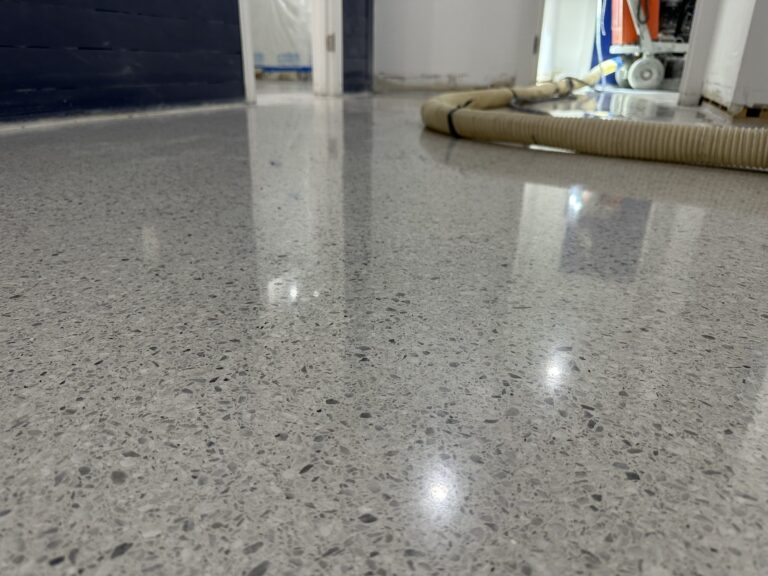
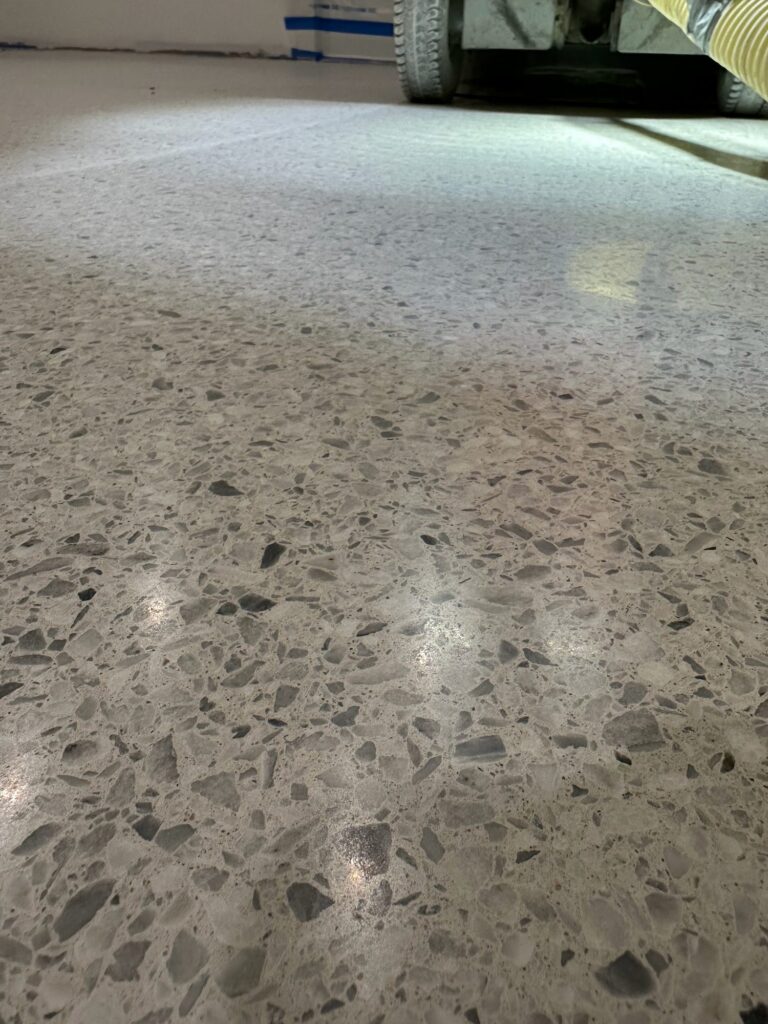
Finished terrazzo, Hyannis office (project photographs, not sample panels)

Aggregate Character

Compare the aggregate type, size, blend and distribution available within the selected system. Fine and larger aggregate appearances create different visual effects.

Matrix Color

Review the background color alongside the aggregate. Available colors and customization depend on the material and approved formulation.

Sheen

Discuss Satin, Gloss or High Gloss where supported by the selected system. Sheen is separate from aggregate exposure and should be reviewed alongside lighting, use and maintenance.

Patterns and Transitions

Discuss borders, color changes and divider details where Topcoat can provide them within the specified assembly. Coordinate the design with substrate joints and installation requirements.

TRU PC Colors and TRUazzo Aggregates

Manufacturer color examples, final appearance confirmed by sample.

TRU PC Colors
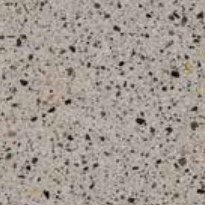
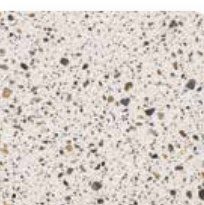
  • Natural 3000N, TRU PC color swatch (manufacturer example)
    Natural 3000N
  • Ivory 3003N, TRU PC color swatch (manufacturer example)
    Ivory 3003N
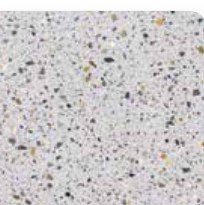
  • Gray Mist 3014N, TRU PC color swatch (manufacturer example)
    Gray Mist 3014N
  • Gray 3000, TRU PC color swatch (manufacturer example)
    Gray 3000
  • Cloud 3001, TRU PC color swatch (manufacturer example)
    Cloud 3001
  • French Gray 3261, TRU PC color swatch (manufacturer example)
    French Gray 3261
  • Gray Ash 3172, TRU PC color swatch (manufacturer example)
    Gray Ash 3172
  • Ebony 3162, TRU PC color swatch (manufacturer example)
    Ebony 3162

TRUazzo Aggregate Add-ins

  • TRU AGG (TRU PC Gray) 3007, TRUazzo aggregate swatch (manufacturer example)
    TRU AGG (TRU PC Gray) 3007
  • TRU AGG (TRU SL Gray) 2007, TRUazzo aggregate swatch (manufacturer example)
    TRU AGG (TRU SL Gray) 2007
  • Glass Blend (TRU SL Natural) 5019, TRUazzo aggregate swatch (manufacturer example)
    Glass Blend (TRU SL Natural) 5019
  • Marble Blend (TRU SL Gray) 2300, TRUazzo aggregate swatch (manufacturer example)
    Marble Blend (TRU SL Gray) 2300
  • Glass Blend (TRU SL Natural) 5021, TRUazzo aggregate swatch (manufacturer example)
    Glass Blend (TRU SL Natural) 5021
  • Trap Rock (TRU PC Gray) 3400, TRUazzo aggregate swatch (manufacturer example)
    Trap Rock (TRU PC Gray) 3400
  • Mother of Pearl (TRU SL Natural) 5011, TRUazzo aggregate swatch (manufacturer example)
    Mother of Pearl (TRU SL Natural) 5011

  • Mother of Pearl (TRU SL Natural) 5009, TRUazzo aggregate swatch (manufacturer example)
    Mother of Pearl (TRU SL Natural) 5009

Swatches: CTS Cement / Rapid Set TRU color chart

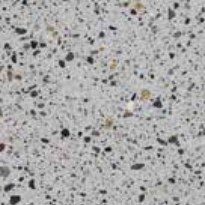
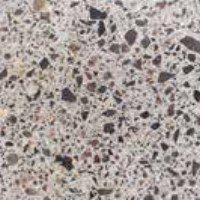
Ardex K523: a gray base with light and dark aggregate, per ARDEX.

A physical sample or representative mockup helps establish the finish expectation. Cementitious floors can show variation in color, aggregate distribution and surface character. A sample establishes a direction rather than guaranteeing an identical appearance across every part of the floor.

Our Process: From Substrate to Finished Surface

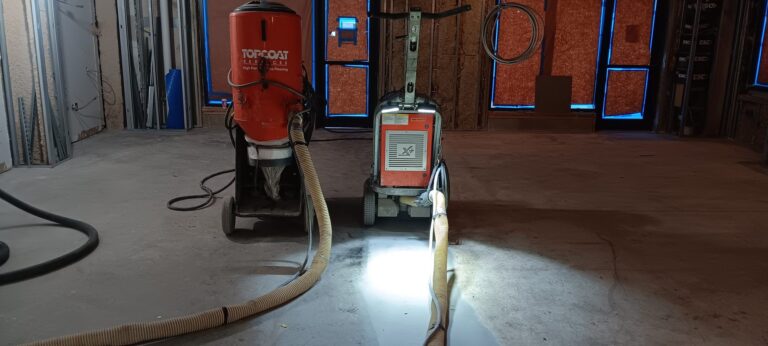
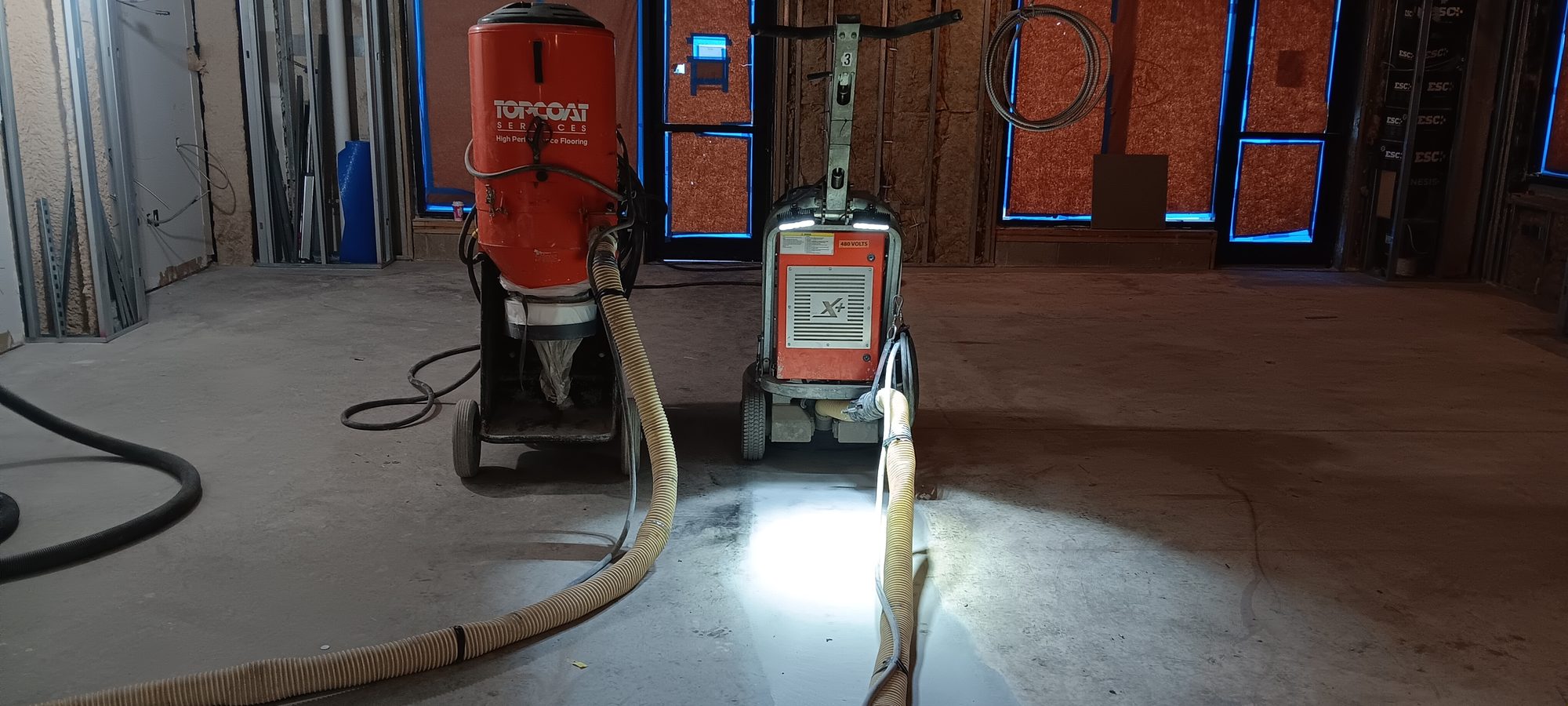
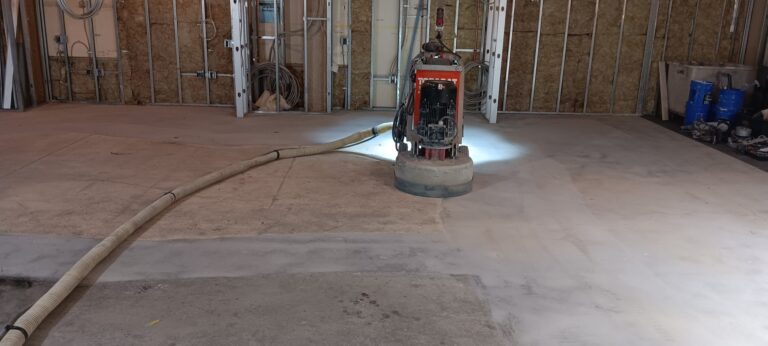
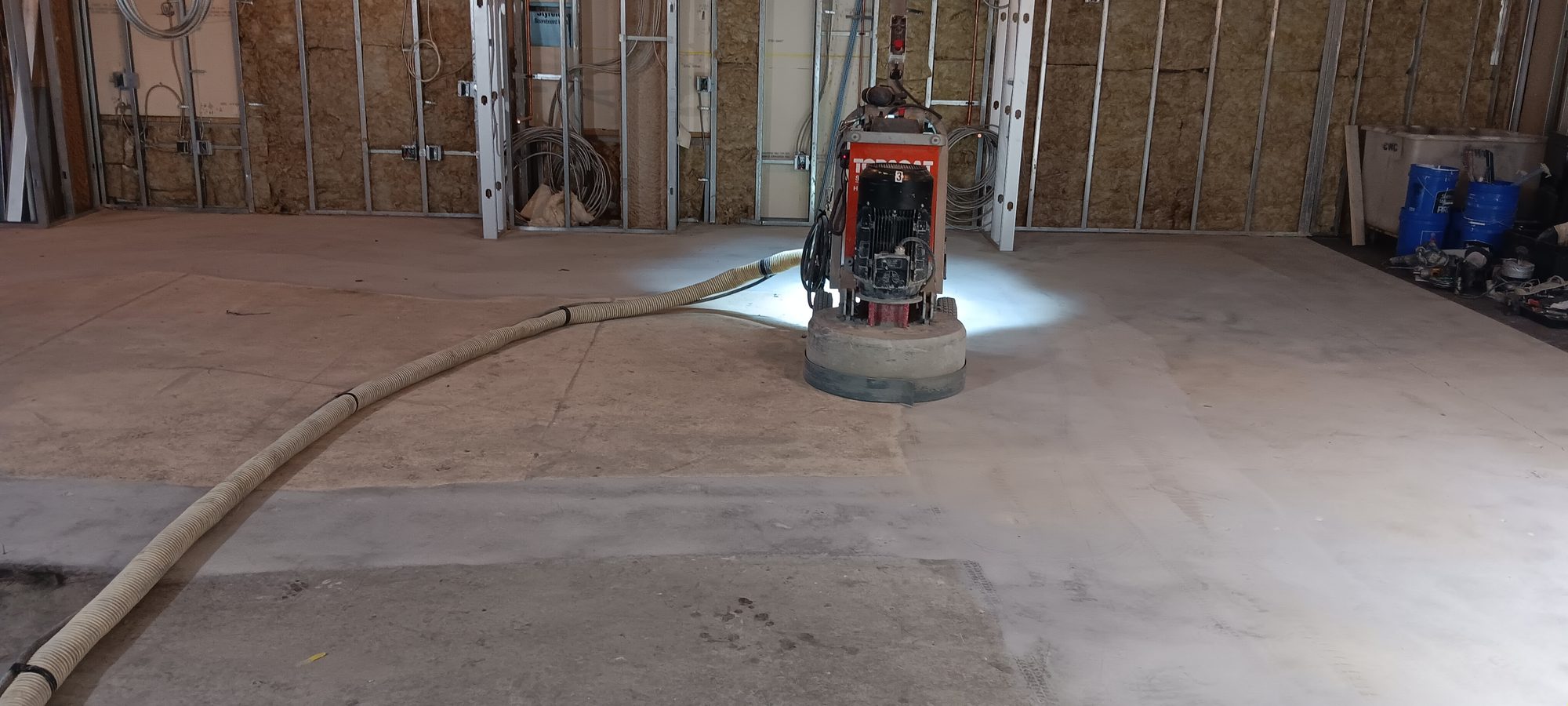
Topcoat owns the preparation and polishing equipment needed for its work. Our crews coordinate the substrate preparation, placement and finishing sequence around the selected system and agreed appearance.

The finish is developed through the work performed on the material. Preparation, placement quality and mechanical refinement all contribute to the result.

1. Assess the Substrate and Design

Review the existing construction, materials, repairs, moisture information, traffic and finish goals. Establish which conditions need investigation before selecting the assembly.

2. Plan Elevations, Joints and Transitions

Coordinate the total build-up with doors, thresholds, adjacent finishes and equipment. Review substrate joints and any divider or termination details before placement.

3. Mechanically Prepare and Repair

Remove unsuitable materials within the scope, complete compatible repairs and establish the substrate condition required by the selected system. Apply the specified primer or other preparation components.

Learn about surface preparation

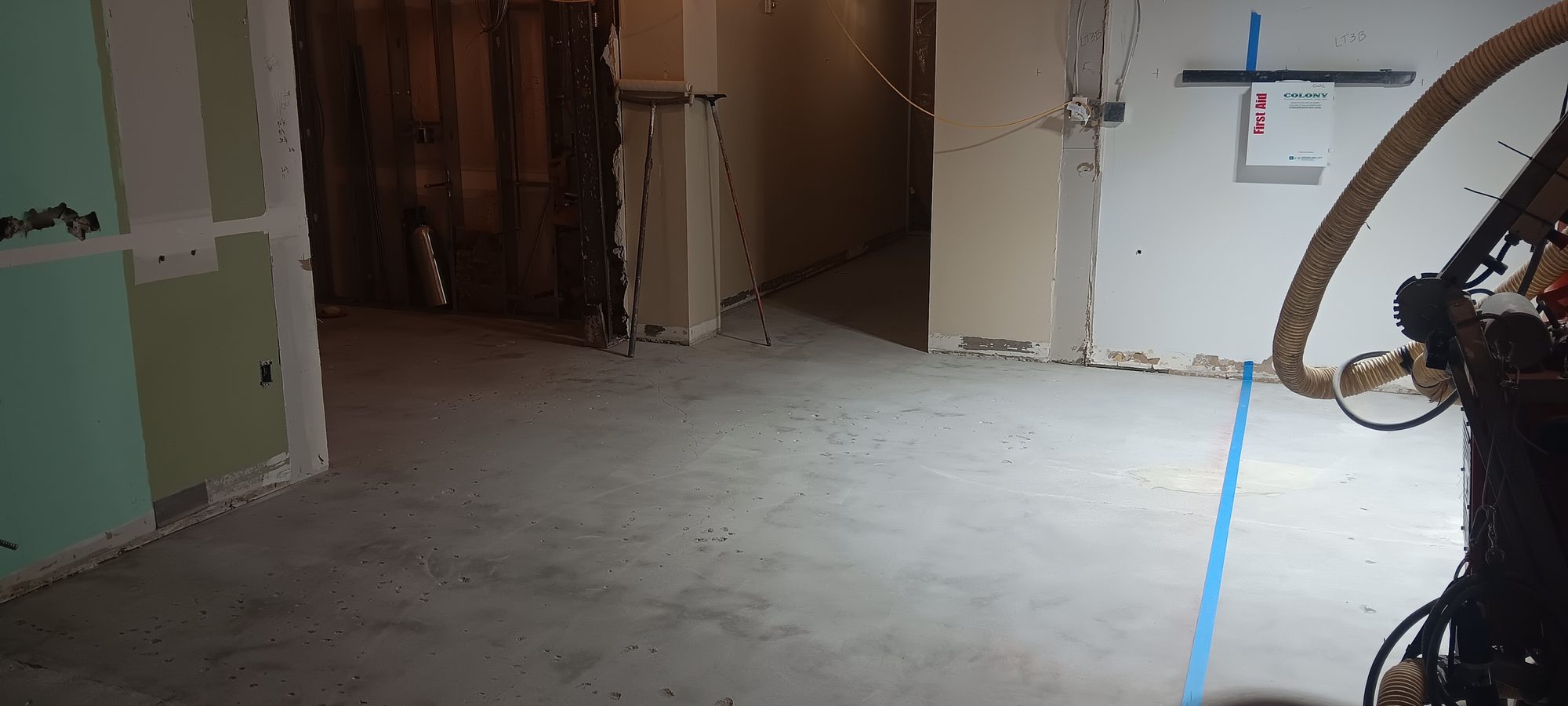
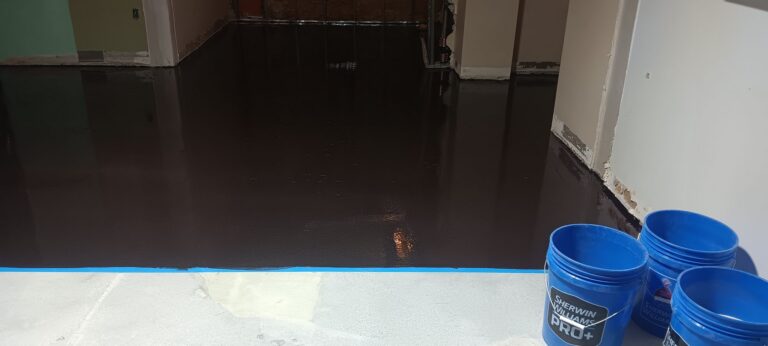
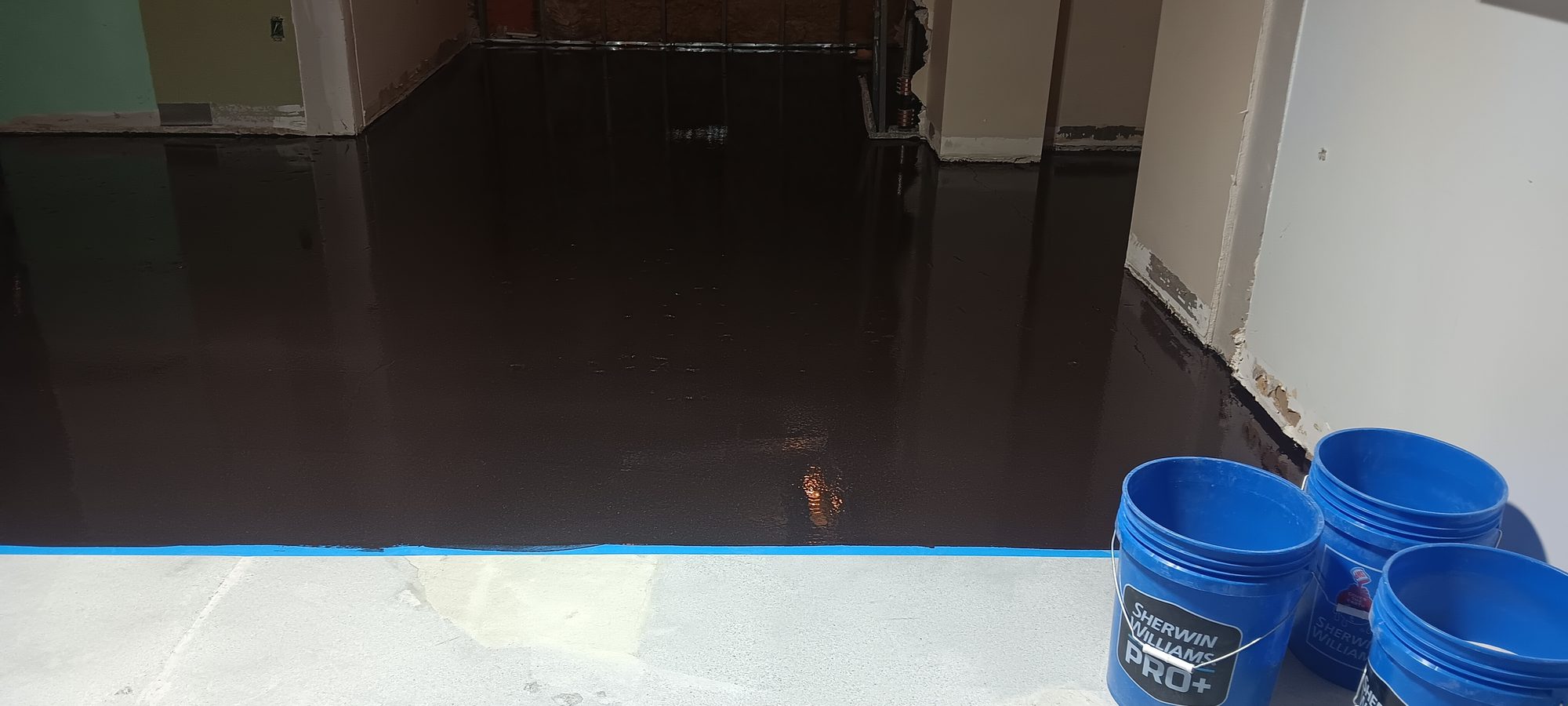
4. Place the Overlay or Cement Terrazzo

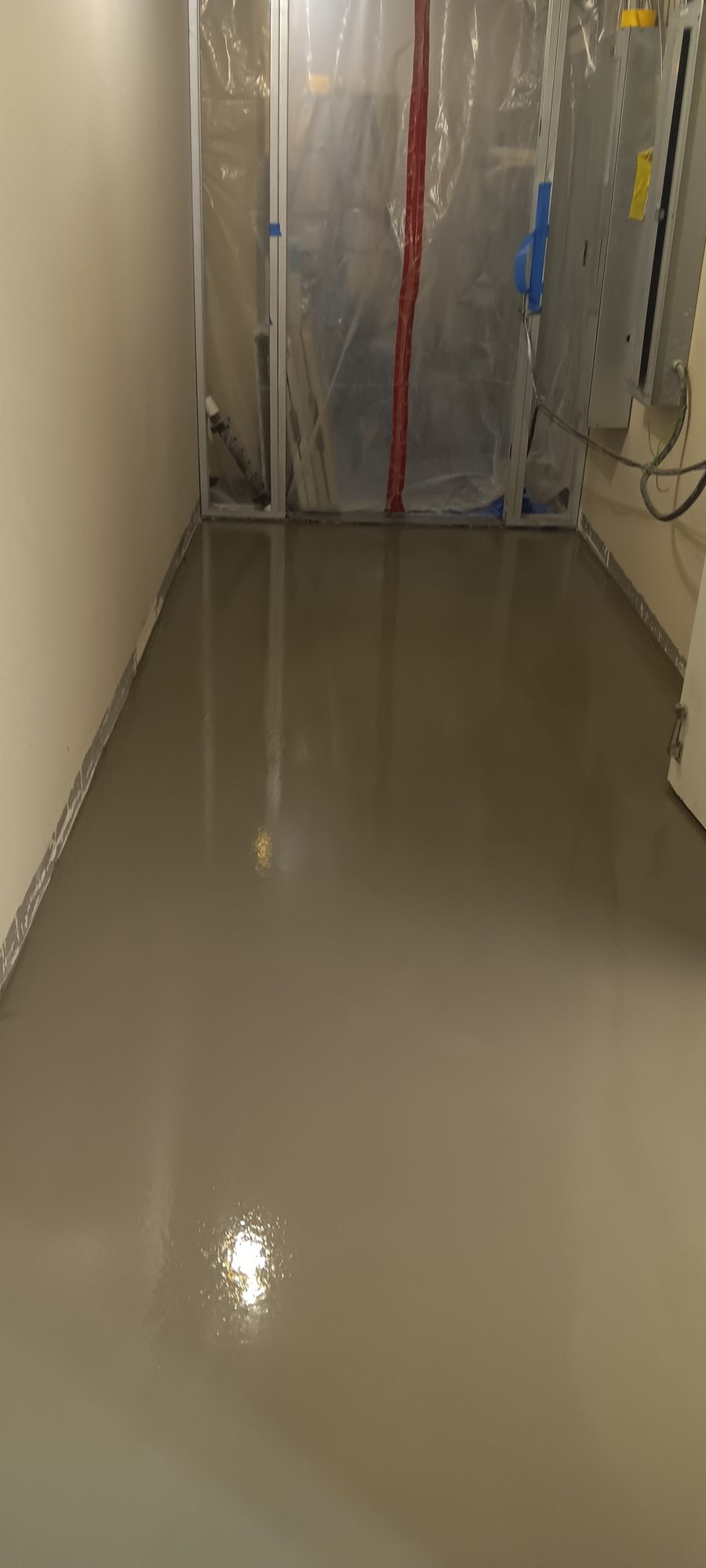
Mix and place the selected materials according to the approved system. Coordinate aggregate, color, placement areas and detailing with the agreed samples and project requirements.

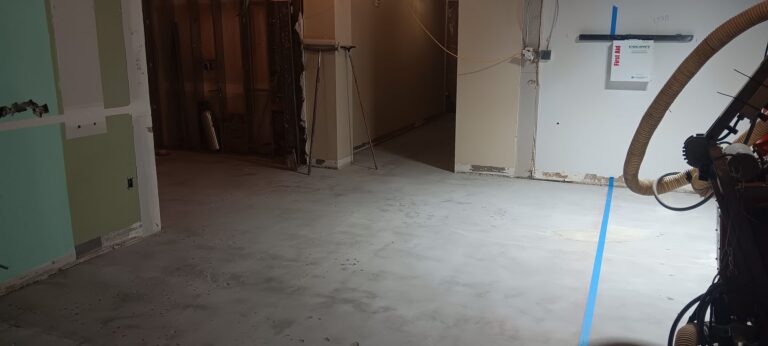
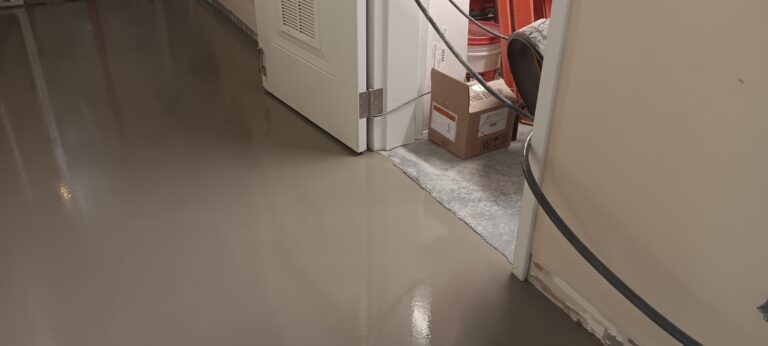
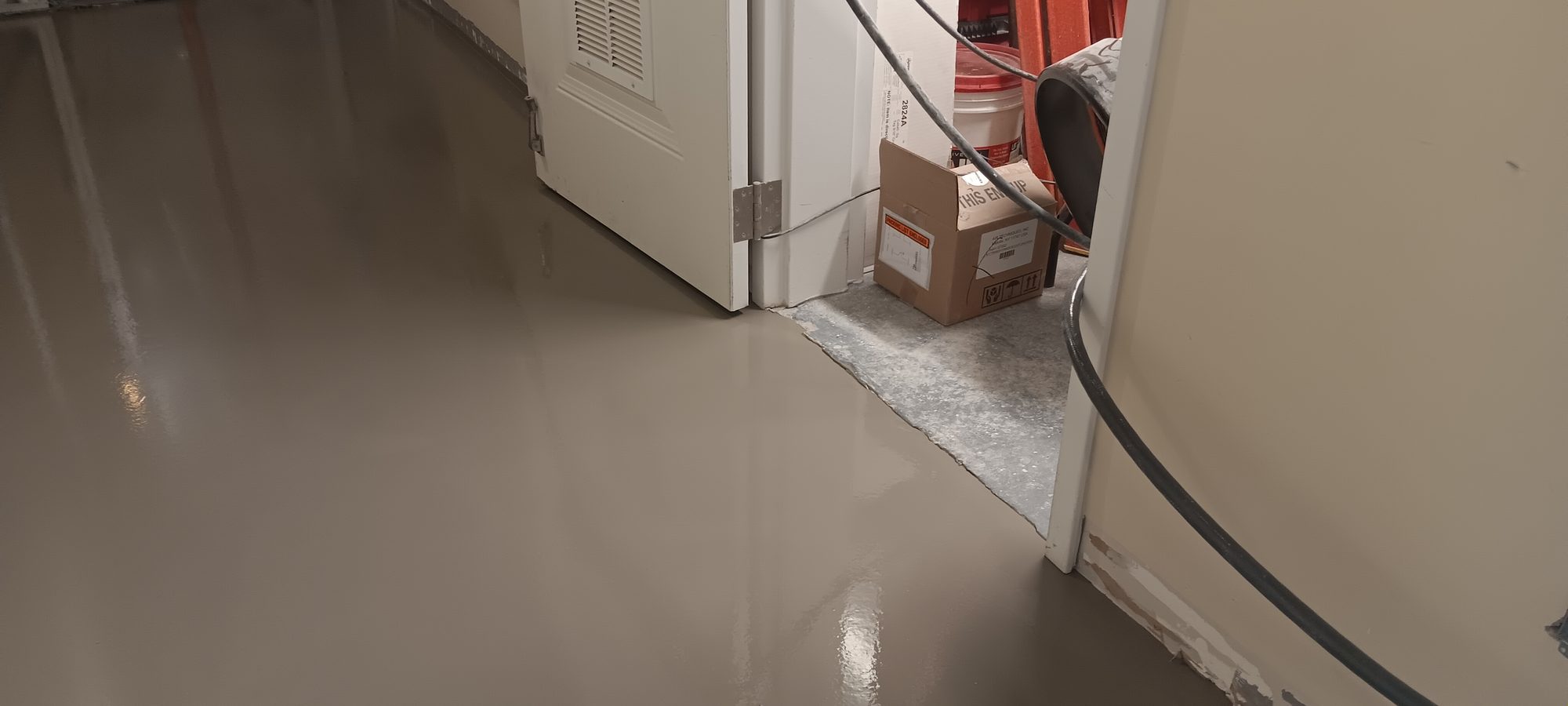
Corridor covered with freshly placed Ardex K523 cementitious topping, with plastic sheeting at the far end, FIXT Lab, Wellesley, MA
Ardex K523 topping being placed, FIXT Lab, Wellesley, MA

5. Grind, Grout and Mechanically Refine

Follow the specified grinding and finishing progression to develop the aggregate appearance and surface finish. Grouting, densification and other treatments are used where required by the particular system—not as a universal recipe.

6. Protect, Inspect and Hand Over

Complete the specified protective treatment and review the finish against the agreed expectations. Confirm protection, return-to-use requirements and maintenance instructions.

Architectural Flooring for Commercial Interiors

  • Retail stores and showrooms
  • Commercial lobbies and reception areas
  • Offices and shared spaces
  • Hospitality and public-facing interiors
  • Educational and institutional interiors

Match the material and finish to the actual traffic, contamination and maintenance conditions.

See the Material, the Process and the Finished Floor

FIXT Lab, Wellesley

System
Ardex K523 polishable topping
Area
1,725 SF
Completed
2024

Placement and mechanical finishing

Hyannis Office

System
Ardex cementitious terrazzo

Finished floor

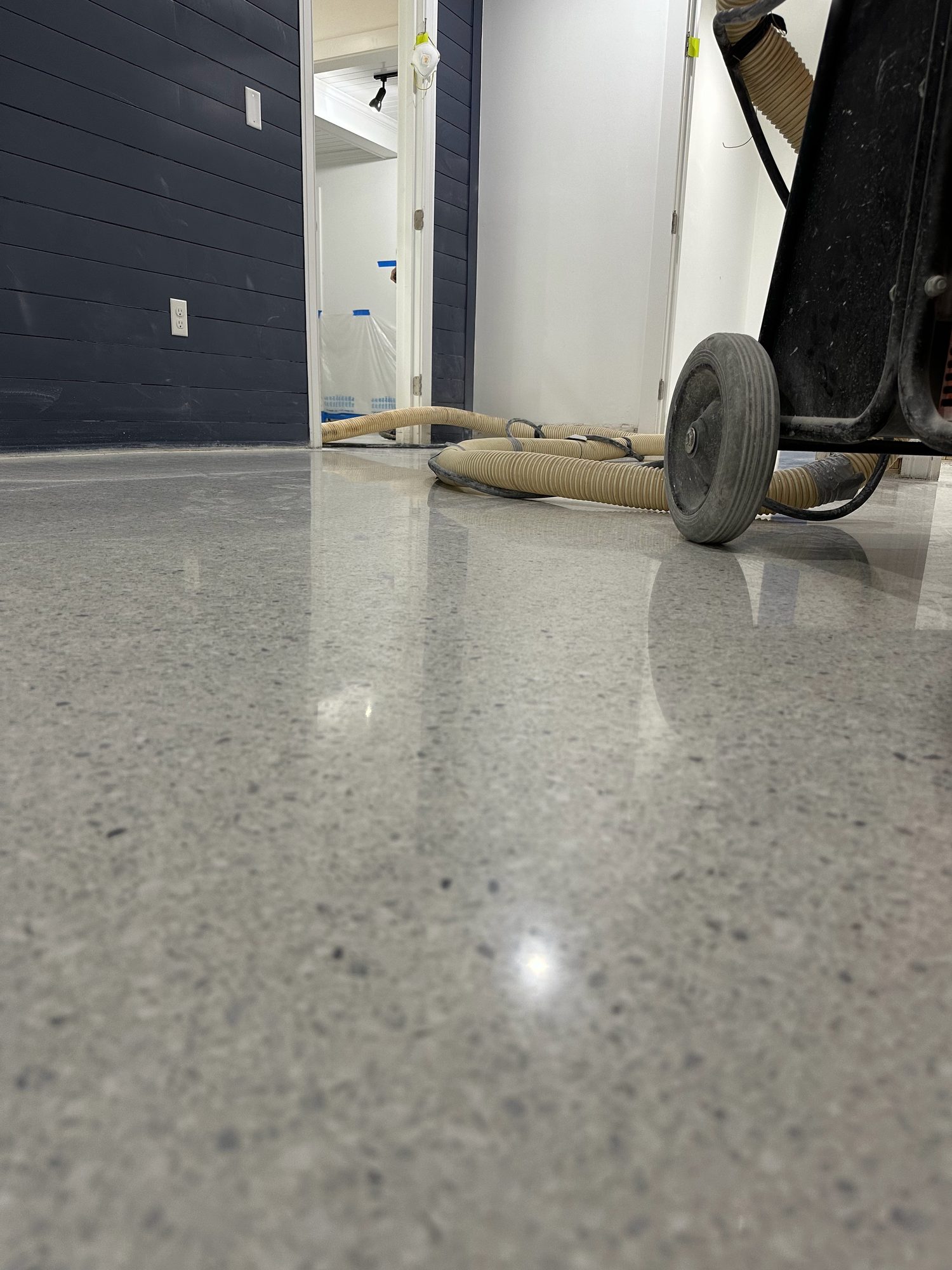
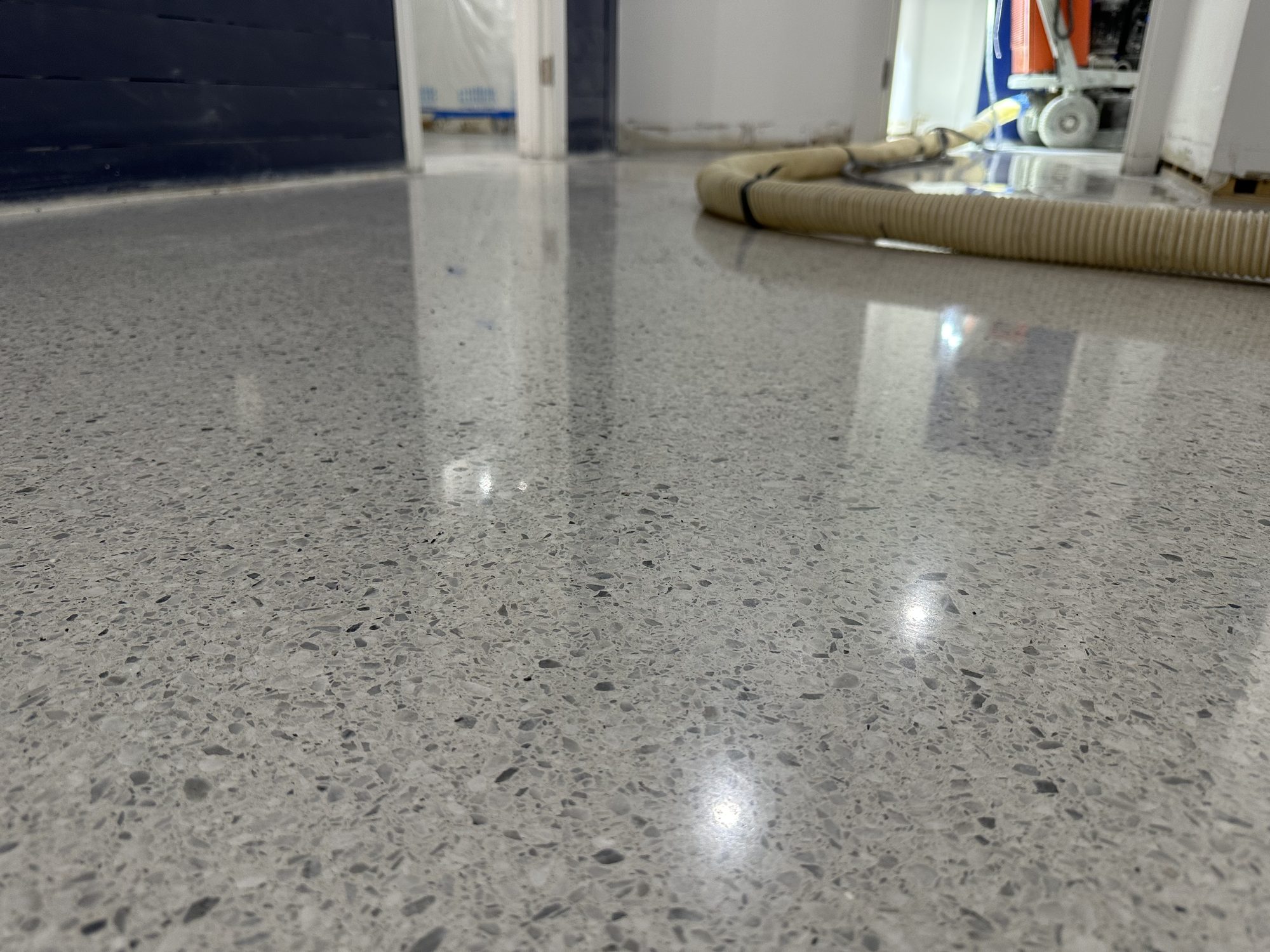
Polished cement terrazzo hallway with a grinder and hose, Ardex cementitious terrazzo, Hyannis office
Cement terrazzo hallway with grinder and hose, Ardex cementitious terrazzo, Hyannis office

What Should Be Resolved Before Installation?

  • Substrate suitability: Existing materials, soundness, repairs and moisture requirements.
  • Assembly thickness: Required build-up and finished elevations.
  • Joints and movement: Treatment consistent with the substrate and specified assembly.
  • Appearance: Approved samples, aggregate, color and finish expectations.
  • Protection and access: Cure, polishing, adjacent trades and protection before handover.

Maintain the Finish You Selected

Remove abrasive debris and spills promptly. Use cleaning products and equipment suited to the installed material and protective treatment.

Cement-based surfaces can be affected by acidic substances. Protective treatments do not make every floor stain-proof or maintenance-free. Inspection, treatment renewal or restoration should follow actual condition and the installed system’s guidance.

What Affects Overlay and Cement Terrazzo Cost?

Area, substrate preparation, repairs, system thickness, aggregate, color, patterns, edge work and polishing all influence the scope.

Existing-floor removal and elevation corrections may add work before placement begins. Samples, installation sequencing, curing, finishing and protection also belong in the project schedule.

Share drawings, photographs, approximate area, design references and the intended opening date to start the discussion.

Polishable Overlay & Cement Terrazzo FAQs

An overlay creates a new topping that is mechanically finished. Existing-slab polishing refines the original concrete. Both can produce exposed-aggregate appearances, but their materials, preparation, thickness and finish expectations differ. Assess the existing slab and design requirements before choosing the approach.

Cement terrazzo uses selected decorative aggregate within a cement-based matrix as a specified terrazzo assembly. Polishable overlays are toppings formulated for mechanical finishing. Their appearance can overlap, but the actual material and installation specification determine how the floor should be described.

A new topping may provide a different finished surface over a suitably prepared substrate. It does not eliminate the need to assess repairs, contamination, moisture or movement. The substrate and selected assembly determine whether an overlay is appropriate.

A cementitious finish cannot be promised crack-free. Substrate movement, existing cracks, joints and installation conditions affect performance. Evaluate these conditions and establish the appropriate details before placement. Repairs or new toppings do not automatically prevent future movement from affecting the surface.

Options depend on the selected material and system. Review available blends and colors through samples, then confirm the proposed formulation and appearance before installation. Do not assume every aggregate type or custom color is compatible with every topping.

Thickness depends on the complete specified assembly, including any required preparation, underlayment or terrazzo components. Confirm the minimum and maximum placement depths and coordinate the finished elevations with adjacent construction. There is no single thickness covering all overlays and cement terrazzo.

A less reflective finish may be available within the selected system’s finishing options. Review a representative sample alongside lighting, intended use and maintenance. Sheen describes reflected appearance; it does not determine aggregate exposure or establish slip performance.

Bring Us Your Finish Concept and Your Existing Conditions

Topcoat serves commercial projects across Massachusetts, Rhode Island, Connecticut, New Hampshire, Vermont and Maine.

Share the location, approximate area, existing substrate and examples of the finish you want. Include drawings, elevation requirements and project timing where available.

Call (774) 470-4951