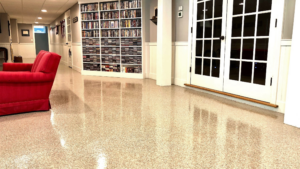
Concrete flooring plays a major role in how well a commercial space performs day after day. Property managers want a surface that stands up to heavy activity while still offering a clean and polished look. Acid stained concrete floors have become a strong choice for these environments because they combine dependable strength with a unique visual finish. This flooring option works well in retail stores, industrial facilities, offices, restaurants, and many other commercial buildings that need durability without giving up style.
Topcoat Services installs acid stained concrete floors that support the demands of high-traffic spaces. The stain penetrates the slab instead of sitting on the surface. This creates color variations that stay in place through years of use. After sealing, the floor becomes resistant to scratches, spills, and daily wear, which helps commercial interiors stay consistent and professional. Understanding how acid stained concrete floors function can help building owners and managers see why they fit so many types of properties.
Why Acid Stained Concrete Floors Perform Well
Acid stained concrete floors start with a chemical reaction between the stain and the minerals inside the slab. This reaction creates color movement that becomes part of the concrete itself. Since the stained layer forms within the slab, it does not peel or chip like paint or thin coatings. Commercial spaces with rolling carts, equipment, and constant foot traffic benefit from this dependable bond.
Once the staining process is complete, a protective sealer is applied. This sealer strengthens the surface so it can handle everyday activity. In properties with high foot traffic, a sealed floor stands up well against marks, scuffs, and surface scratches. This makes the flooring a reliable option for areas that experience steady movement throughout the workday.
Moisture resistance is another important feature of acid stained concrete floors. Sealed floors limit water intrusion, which helps protect the slab in places where spills or tracked-in moisture are common. Entrances, break rooms, storage areas, and long hallways all benefit from a surface that holds up against liquids while maintaining its appearance.
Aesthetic Benefits of Acid Stained Concrete Floors
Visual appeal matters in commercial properties, and acid stained concrete floors offer character that standard concrete does not. When the stain reacts with the concrete, it creates natural color movement that makes each floor one of a kind. This effect works well in lobbies, showrooms, and large open interiors where the floor becomes part of the overall design.
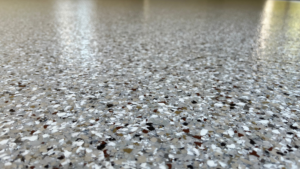
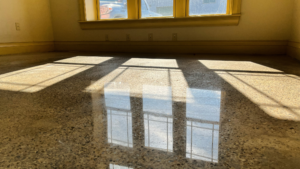
The staining process provides a wide range of color tones. Browns, greens, soft blues, and warm earth shades are popular choices that suit many commercial styles. The marbling effect helps hide minor surface marks, which keeps the floor looking clean even with heavy use. Once sealed, the surface reflects light in a way that brightens large rooms. This can help make commercial spaces feel open and inviting while supporting the building’s overall design.
Preparing Concrete for Acid Staining
Proper preparation is important for creating a strong finished product. The concrete must be clean so the stain can react evenly across the slab. Any dirt, oils, or residue must be removed before staining begins. If repairs are required, they are addressed early so the stain can move across the surface without interruption.
Some floors may require grinding if they have old coatings or sealers. This step gives the surface the right profile for accepting the stain. Once preparation is complete, the staining process produces consistent results that hold up well after sealing.
Applying Acid Stain
The staining process is done carefully to create an even and consistent finish. The stain is applied across the slab and allowed to react with the concrete. This reaction creates the signature color movement that makes acid stained concrete floors unique. Since the reaction varies depending on the minerals in the slab, each project develops its own pattern and depth.
After the stain has finished reacting, the surface is rinsed and neutralized. This step stops the chemical reaction so the sealer can bond properly. Once the floor is fully cleaned and dried, the sealer is applied to lock in the color and protect the surface from daily use.
Maintaining Acid Stained Concrete Floors
Acid stained concrete floors are known for being straightforward to maintain. Routine sweeping and mopping with a neutral cleaner help keep the surface looking fresh. Because the sealer protects the slab from most marks and spills, cleaning does not require specialized tools or harsh products.
Over time, commercial spaces may need to reapply the sealer. This is a simple process that helps protect the floor and keeps the color looking rich. The timing of resealing depends on the level of traffic in the building. High-traffic properties may reapply sooner than low-traffic spaces, but the process remains easy and predictable for maintenance teams.
Where Acid Stained Concrete Floors Work Best
Acid stained concrete floors can support many different environments. Retail centers value their appearance and ease of cleaning. Industrial facilities rely on their strength. Offices appreciate the polished and professional look. Restaurants use them to create a clean finish that stands up to spills and movement.
Outdoor areas can also benefit from this flooring option. Patios, walkways, and covered exterior spaces often perform well with acid stained concrete floors because the stain becomes part of the slab and resists fading from sunlight. Property managers looking for a dependable surface that works in both indoor and outdoor settings often choose acid staining for its versatility.
Contact Topcoat Services
Acid stained concrete floors offer a combination of strength, performance, and visual appeal that suits many commercial properties. The stain becomes part of the slab, giving the floor dependable color that holds up well under heavy activity. Sealing adds protection that keeps the surface clean and attractive with simple maintenance. Property managers who need flooring that performs well across different environments often find that acid staining meets both practical and design needs. Topcoat Services installs acid stained concrete floors that support long-term value and help commercial spaces look professional and polished. Contact Topcoat Services today to discuss your next flooring project and learn how acid staining can support the needs of your property.
Frequently Asked Questions
What makes acid stained concrete floors different from regular concrete?
Acid stained concrete floors use a reactive stain that bonds with the slab. This creates color movement inside the concrete rather than on the surface.
How long do acid stained concrete floors last in a commercial setting?
Acid stained concrete floors can last for many years because the color becomes part of the slab. With routine cleaning and periodic resealing, they hold up well under heavy use.
Are acid stained concrete floors easy to maintain?
Yes. Daily sweeping and simple mopping keep the surface clean, and the sealed finish helps protect against spills and marks.
Can acid stained concrete floors be used outdoors?
They can. Because the stain penetrates the slab, the color remains strong even in outdoor conditions.
Do acid stained concrete floors work in high-traffic environments?
Yes. They support steady movement in halls, retail stores, warehouses, offices, and similar spaces while maintaining a polished appearance.

With over 12 years of work experience in various fields, I am a versatile and adaptable manager at Topcoat Services USA LLC, a leading provider of polished concrete and epoxy flooring solutions. I have a strong background in logistics, having served as a logistics specialist in the United States Marine Corps for four and a half years. I also have a passion for culinary arts, and I worked as a sous chef at Crafted Hospitality, a renowned restaurant group, for two and a half years. At Topcoat Services USA LLC, I leverage my skills in epoxy flooring, project estimation, and logistics to deliver high-quality and cost-effective projects for our clients. I enjoy working with a diverse and collaborative team of professionals, and I am always eager to learn new techniques and technologies in the flooring industry. My mission is to create durable, beautiful, and sustainable floors that meet the needs and expectations of our customers.