
Topcoat Mechanical Polished Concrete
Fully Mechanical Polished Concrete Across New England
A finished floor developed through grinding, densification and mechanical refinement.
Full Mechanical Refinement
Staged grinding, honing and polishing develop the finished surface.
Densification Within the Process
Treat the concrete as part of the specified refinement sequence.
Exposure and Sheen Choices
Choose aggregate exposure separately from Satin, Gloss or High Gloss.
Our Crews and Equipment
Topcoat performs the preparation and polishing with its own team.
ABOUT OUR POLISHING PROCESS
Topcoat Services uses a full mechanical polishing process to develop the concrete surface for commercial and industrial use. We combine staged grinding, surface refinement, grouting, densification, honing and polishing around the slab and specified finish.
The exposure and sheen are developed through the work performed on the concrete. Protective treatments are selected separately to support the floor’s intended use and maintenance.
From new construction to floors hidden beneath old coatings and adhesives, the starting point matters. We help you understand what can be achieved before the work begins.
What is mechanically polished concrete?
Mechanically polished concrete is an existing or new concrete surface refined through a planned sequence of grinding, honing and polishing. Densification and protective treatments are selected for the process and intended use. The concrete itself provides the finished appearance, including the characteristics of its aggregate, pours and repairs.
It is different from grinding a slab and applying a glossy film coating. Both approaches can have a place, but the scope should explain where the appearance comes from, which treatments are applied and how the floor should be maintained.
Where polished concrete fits
- Retail and grocery: finished sales floors where appearance and the cleaning routine matter.
- Warehouses and distribution: suitable concrete surfaces planned around equipment traffic and operations.
- Commercial interiors: showrooms, offices and public-facing areas with an appropriate slab and finish specification.
- Manufacturing support areas: dry workspaces where the floor’s exposure and traffic suit concrete polishing.
Polished concrete is not the starting point for every room. Acids, hot washdowns, persistent wet conditions or specialized chemical exposure may call for another flooring system. We can evaluate different areas of the same facility separately.
The Topcoat Full Mechanical Polishing Process
A polished concrete floor starts with the work performed on the slab. Each stage prepares the surface for the next: removal establishes the starting point, grinding develops the exposure, refinement addresses the scratch pattern, and densification and polishing form part of the specified finish process.
Our crews carry the preparation and polishing through as one coordinated scope. We select the tooling, treatments and progression around the concrete in front of us and the finish agreed for the project.
1. Assess the slab and define the finish
Review the concrete, existing coverings, repairs, traffic and operating conditions. Establish the intended aggregate exposure and sheen, using a representative sample where appropriate.
Slab assessment: raw concrete slab before preparation, showing surface staining, scuffing and a saw-cut joint.
2. Remove existing materials and establish exposure
Mechanically remove the coatings, adhesives or other materials included in the scope. Grind the concrete as needed to reach a suitable surface and develop the agreed exposure, within the slab’s assessed limits.
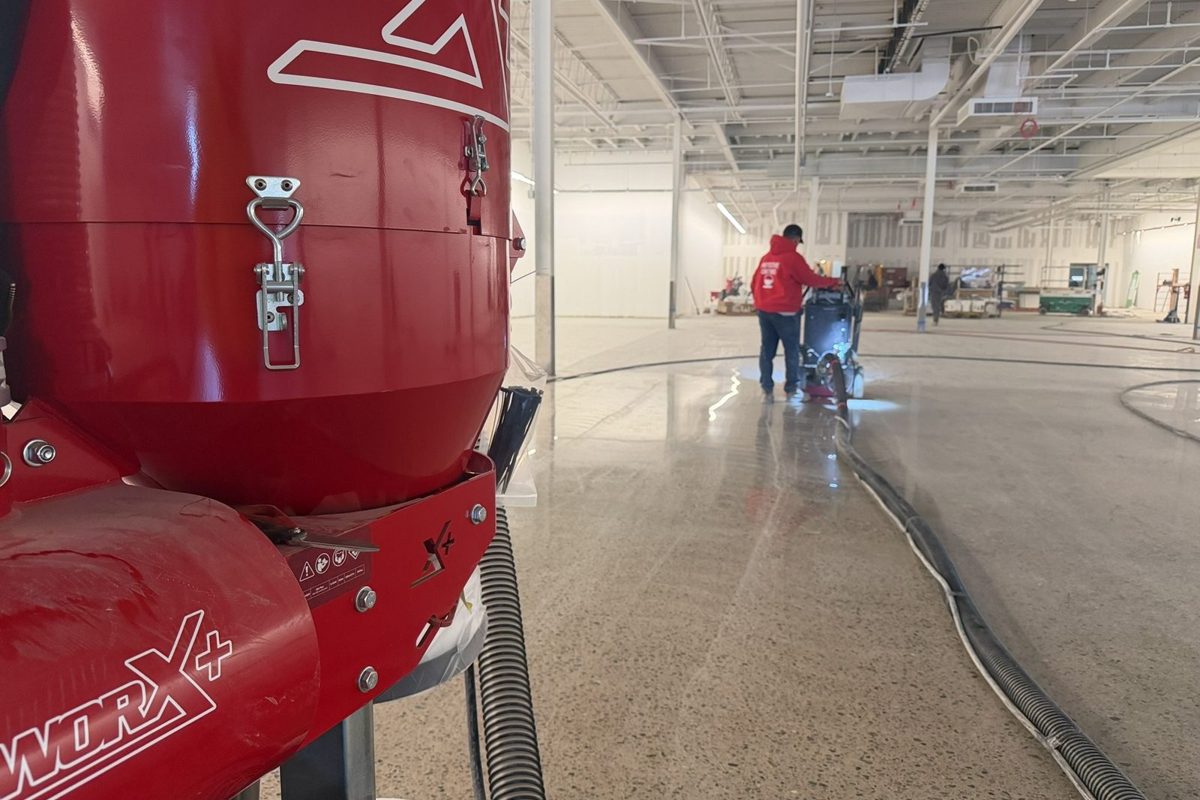
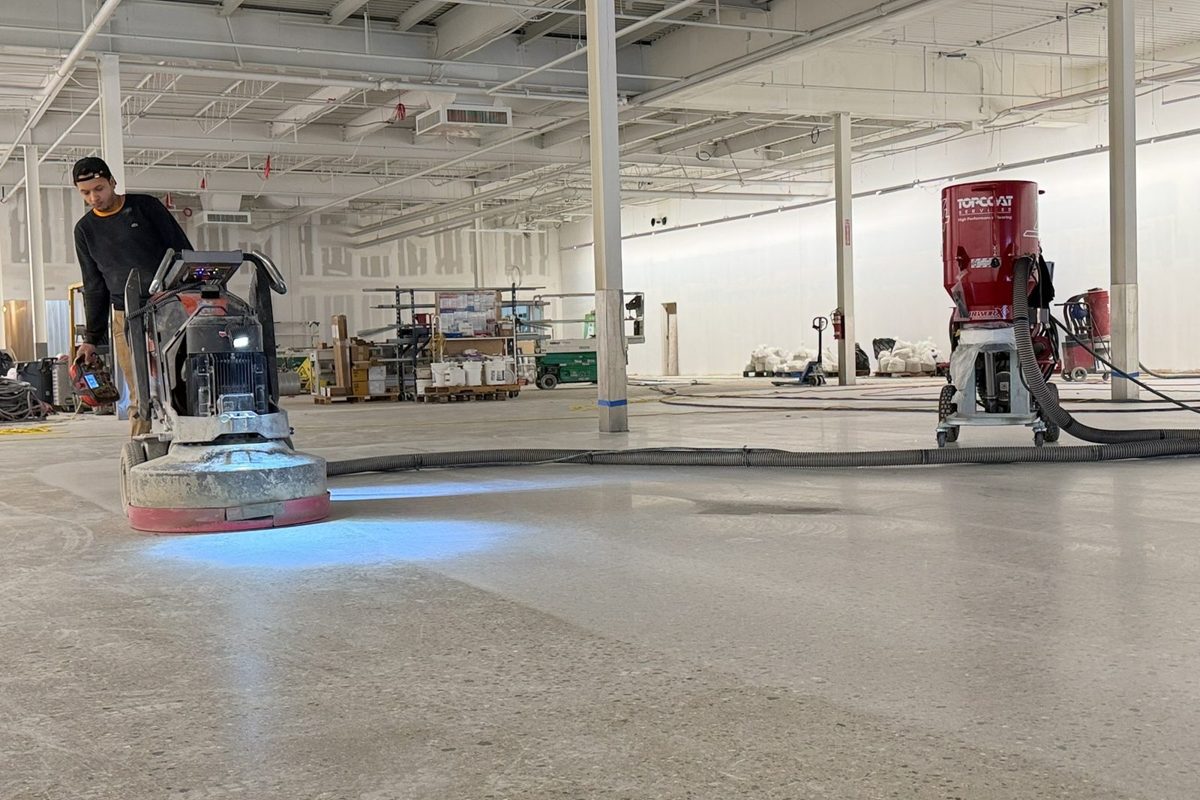
Grinding stage: grinder with dust extraction and dust collector running on the concrete floor.
3. Repair and refine the surface
Complete the specified repairs and joint work. Use the selected refinement and grouting steps to address surface pinholes and prepare for further polishing. Repairs may remain visible as part of the floor’s character.
Grouting stage: slurry applied to the exposed concrete surface, with the polished floor in the background.
4. Densify within the grinding sequence
Apply the specified densifier at the stages required by the selected process and product instructions. Densification is a treatment of the concrete surface; it has a different role from a stain-protection treatment.
Densifying stage: densifier spread over the honed concrete surface with a flat mop.
5. Hone through the tooling progression
Progress through the selected abrasives to refine the preceding scratch pattern. Tooling choice and the decision to move to the next stage depend on the surface and target finish, including the edges and details in the scope.
Honing stage: grinder with dust extraction passing over the exposed concrete surface.
6. Mechanically polish to the agreed sheen
Continue the refinement to the selected Satin, Gloss or High Gloss direction. Evaluate the result against the agreed finish expectation and sample, recognizing variation within the concrete.
Polishing stage: grinder with dust extraction moving across the polished concrete floor.
7. Protect, inspect and hand over
Apply the specified compatible protective treatment and complete any required finishing or burnishing. Review the surface, return-to-use requirements and maintenance guidance with the project team.
Why the sequence matters
The finished appearance reflects the preparation, tooling progression, treatments and attention given to the surface along the way. Our proposal identifies the exposure, sheen and included work so you can compare the process behind the floor as well as the finished photographs.
Choose how much aggregate you want to see
Aggregate exposure describes the material revealed at the surface. It does not describe gloss. Topcoat offers four exposure directions, subject to the slab and an agreed sample or finish expectation.
Surface Polish
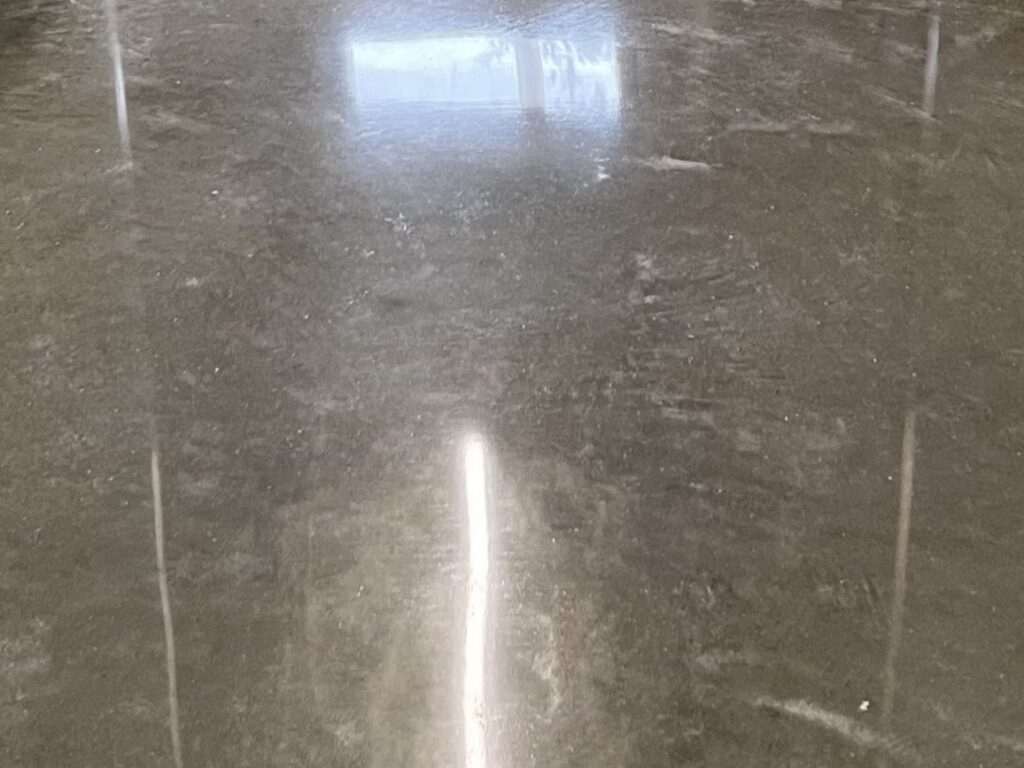
Refines the upper concrete surface while aiming to limit aggregate exposure. The original finishing, surface condition and required repairs affect the final appearance. Even a lightly processed floor may reveal variation.
Salt & Pepper
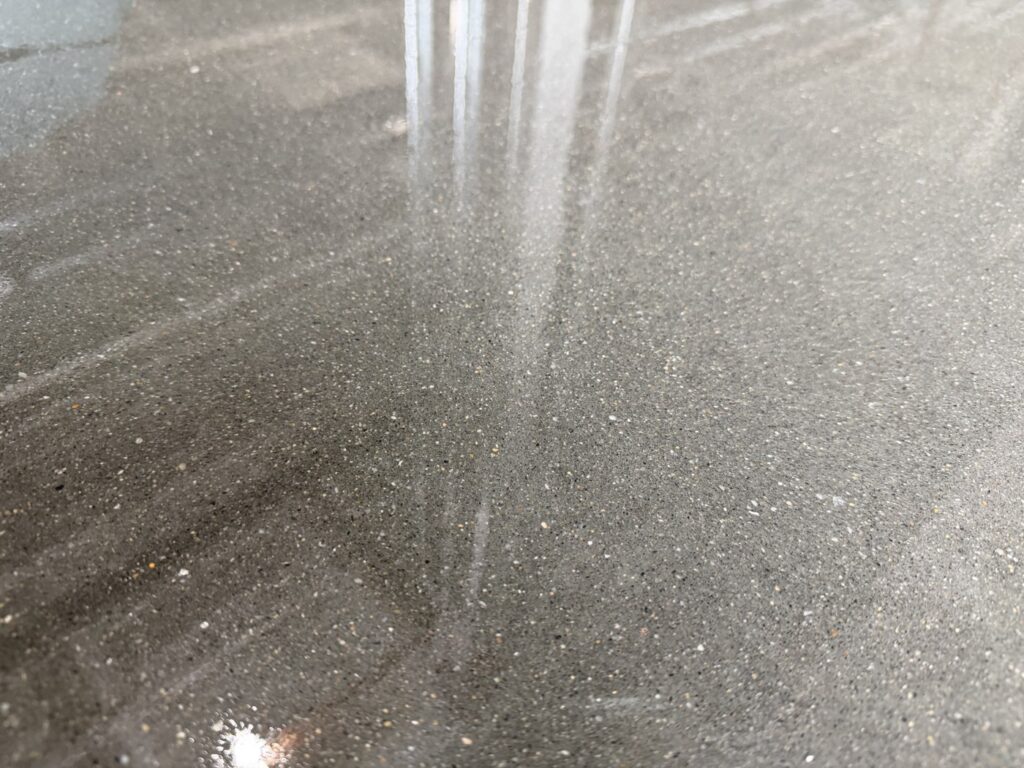
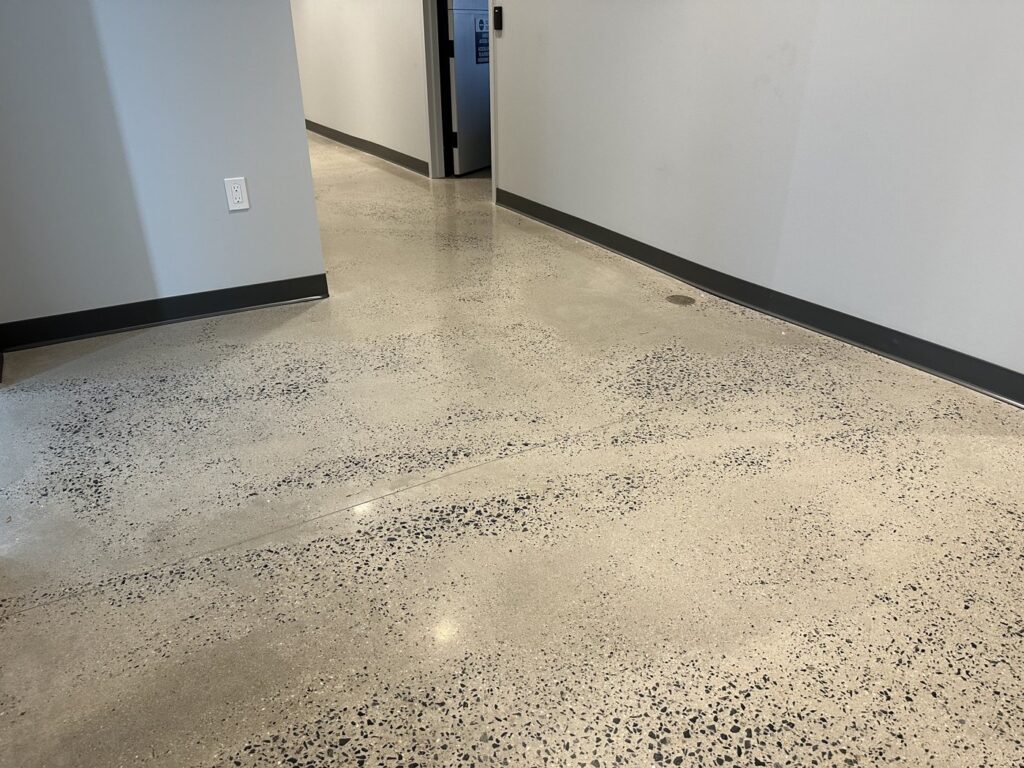
Reveals fine aggregate for a lightly exposed appearance. The distribution depends on the concrete and the preparation needed; it should not be represented as a perfectly uniform pattern.
Random Exposure
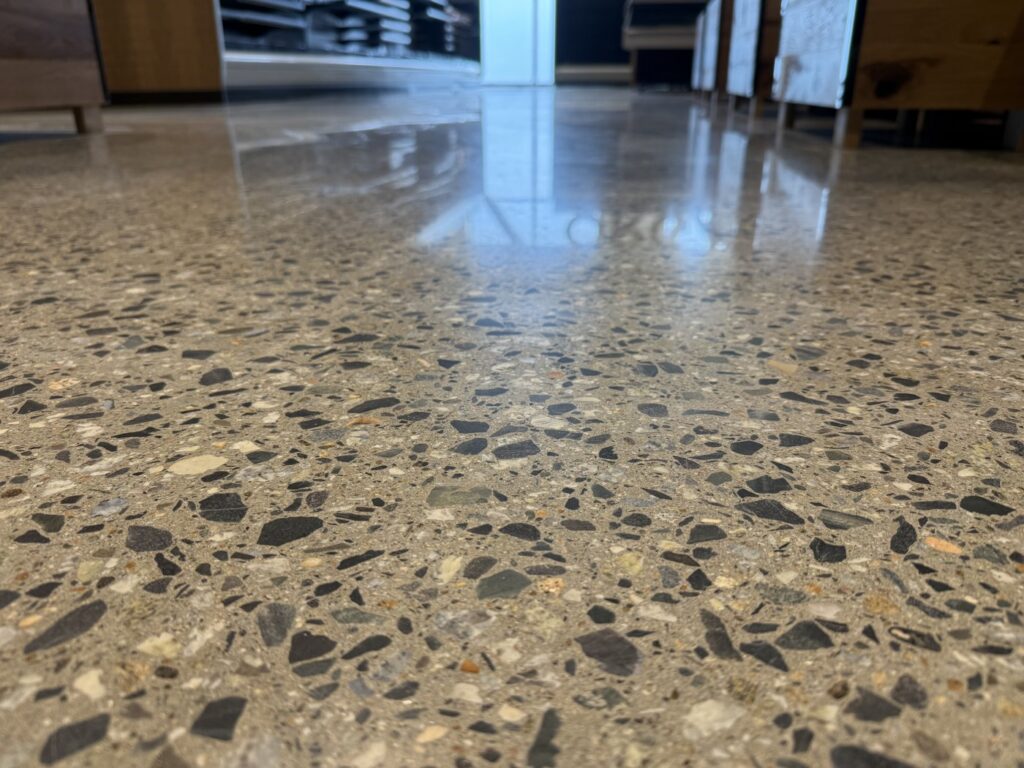
Allows a varied mix of exposed aggregate and concrete surface character. This can suit a project that accepts a less uniform appearance, with the slab influencing where aggregate becomes visible.
Full Exposure
Targets a more extensively revealed aggregate appearance. Feasibility depends on the slab, aggregate depth, required removal and project constraints. More grinding does not make every slab suitable for a full-exposure finish.
A representative sample area helps establish the direction. Different pours, edges, repairs and conditions elsewhere can still produce variation across the finished floor.
Select the sheen separately
Satin
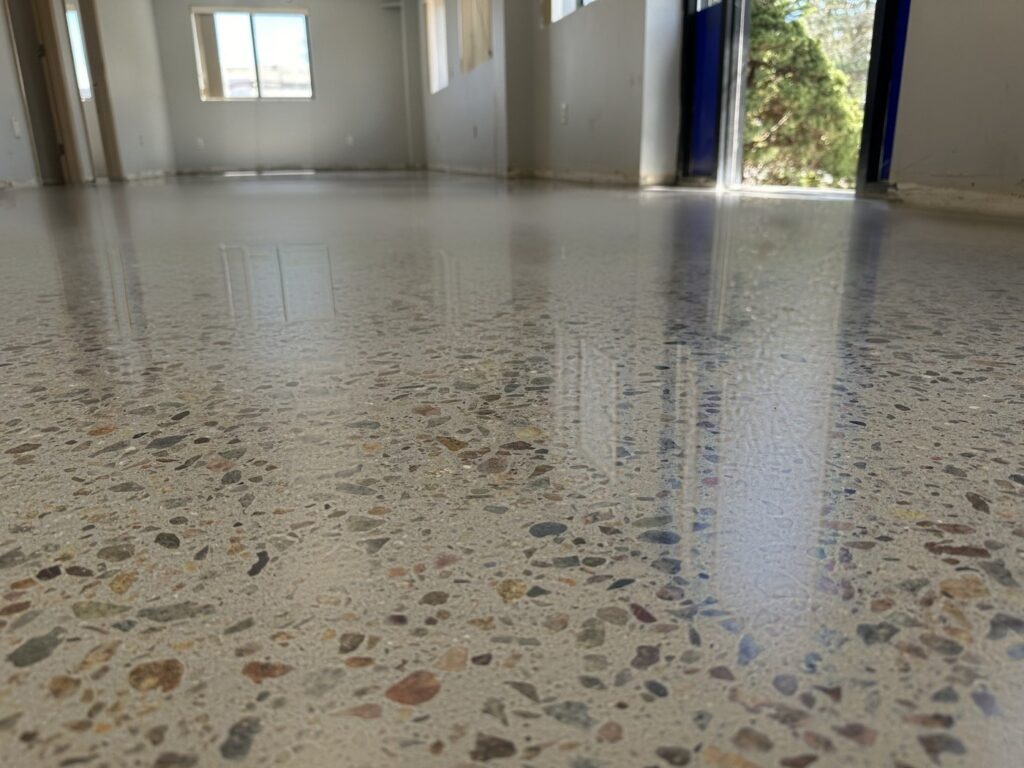
A softer reflected appearance for projects seeking a more subdued finish.
Gloss
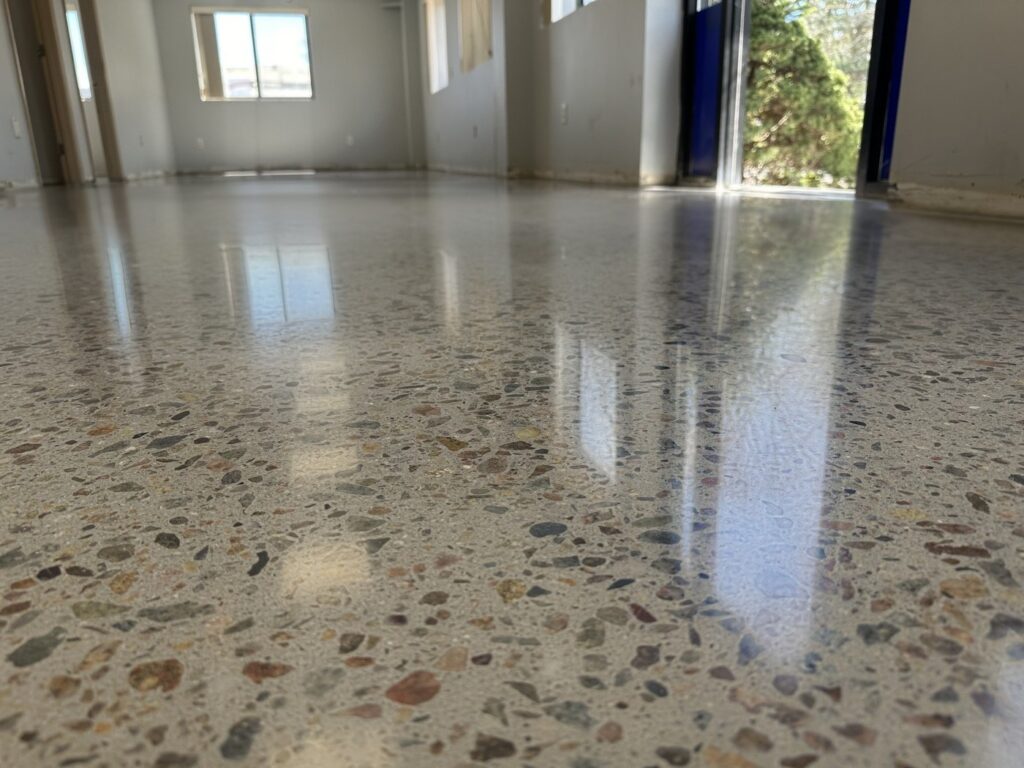
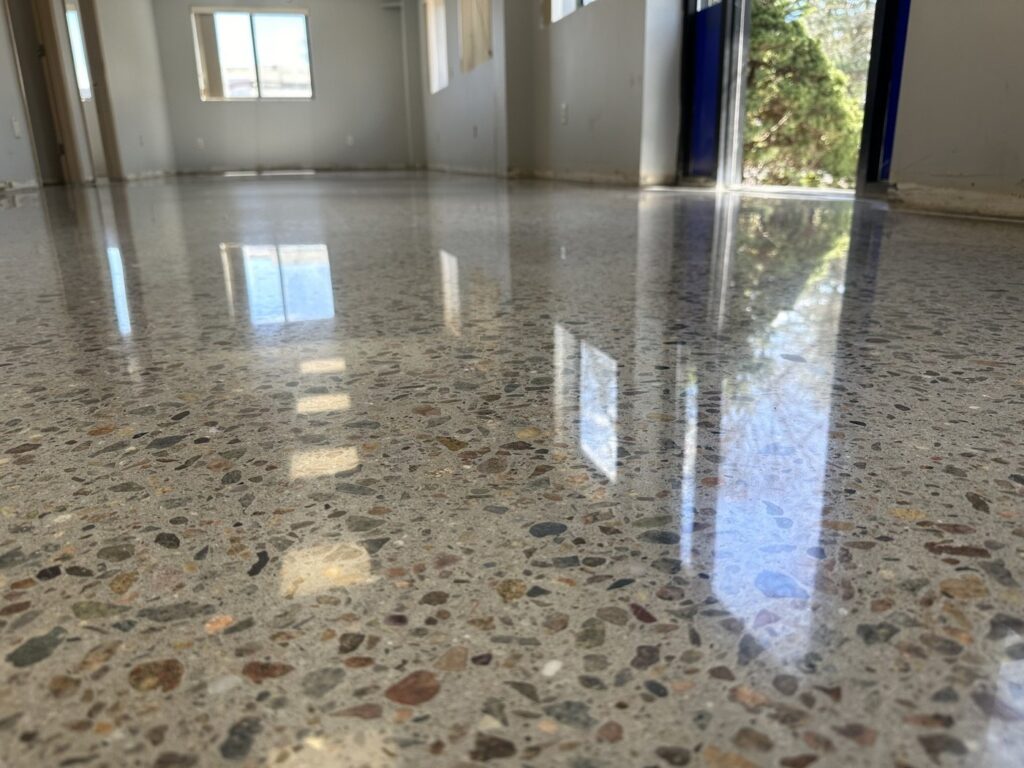
A more reflective finish that emphasizes the refined concrete surface.
High Gloss
A highly reflective appearance for projects where the slab, process and maintenance plan support that goal.
Discuss sheen alongside lighting, use and upkeep. A grit number or a photograph alone does not fully define the finished result. Gloss is not proof of slip resistance, and surface safety depends on contamination, footwear, use and maintenance as well as the finish.
See what preparation made possible
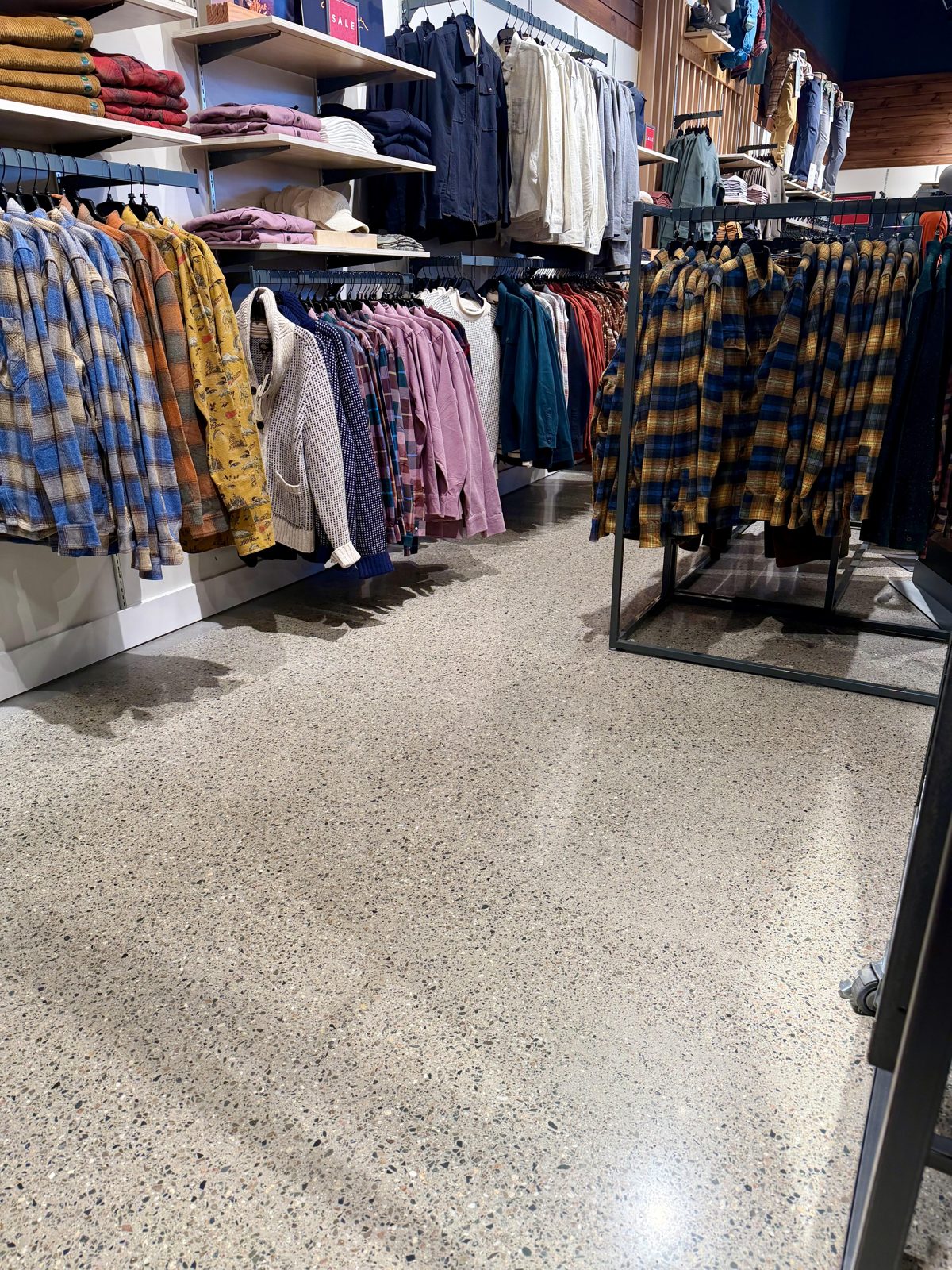
L.L. Bean Outlet — Framingham, Massachusetts
18,000 SF • Completed July 2025
Thinset, extensive patching and uneven transitions had led to a planned full-floor overlay. Topcoat removed the existing material, addressed transitions and mechanically polished the slab. The completed project eliminated the planned overlay and was delivered on schedule.
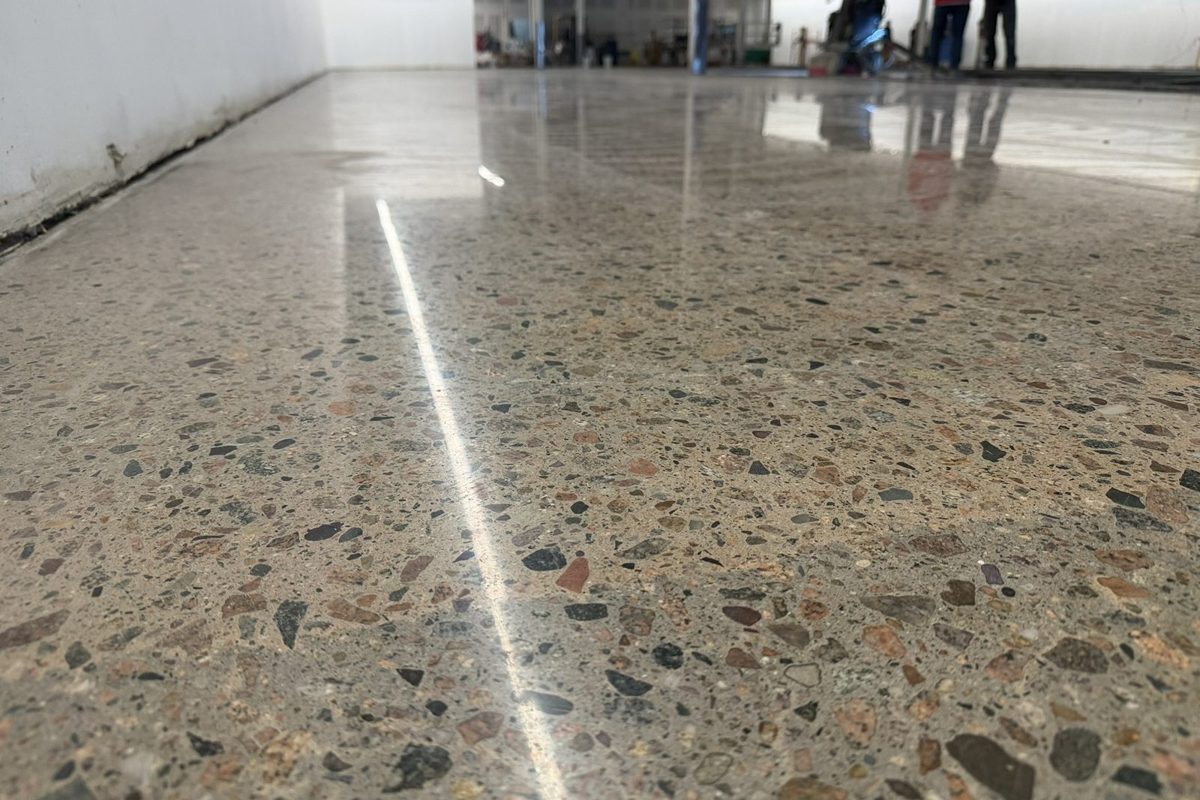
Burlington — Walpole, Massachusetts
25,000 SF project • Completed February 2026
Self-leveling underlayment, mastic and old epoxy covered the existing concrete. Topcoat removed the layers and completed a full-exposure polished sales floor, with a separately sealed warehouse area. The project avoided the planned polishable overlay.
These projects show what was possible on their particular slabs. Assessment is still needed before recommending polishing, extensive removal or an overlay on another project.
The slab sets the starting point
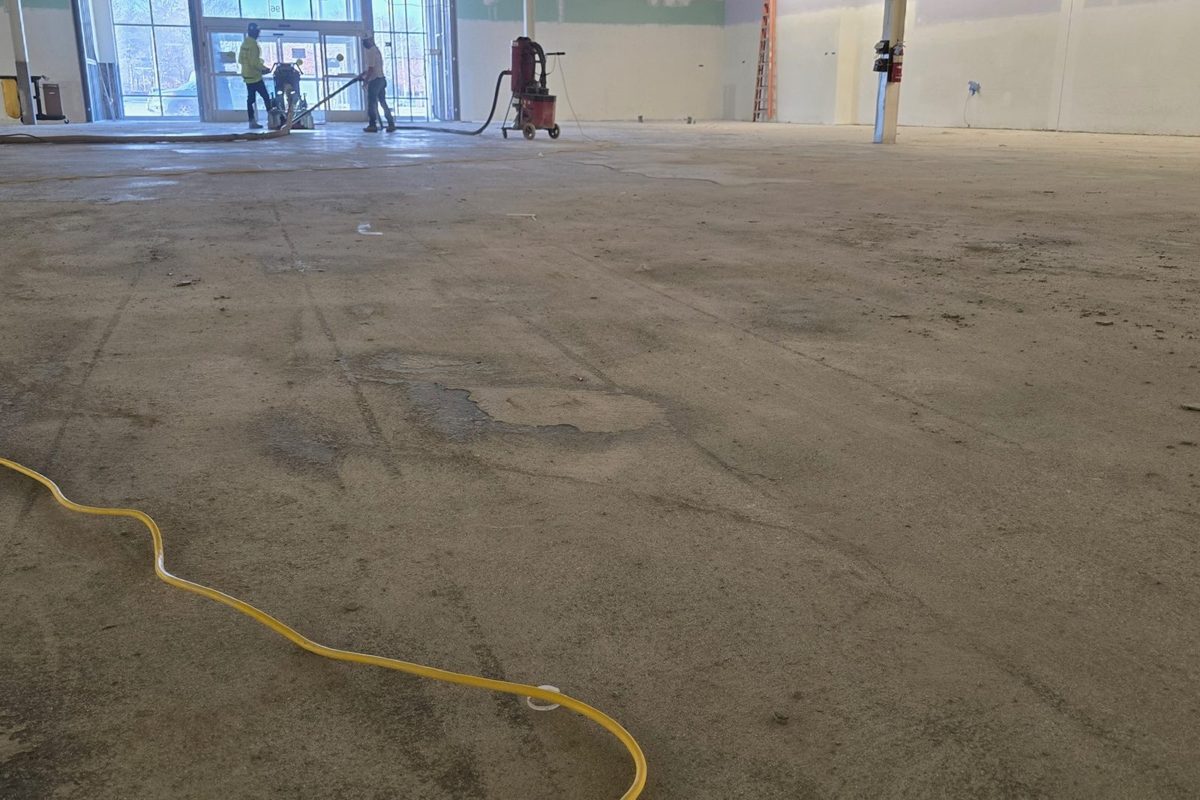
Old floor coverings can conceal adhesive staining, repairs, cracks and changes between pours. Polishing can reveal these features rather than hide them. We review existing conditions and the desired finish so the proposal reflects the actual work required.
The scope may include coating or adhesive removal, mechanical preparation, repairs, pinhole treatment and joint work. Edges and equipment obstructions need planning alongside the main floor area.
If the concrete is unsuitable for the desired appearance, we discuss the alternatives. A polishable overlay, resinous system or another finish may be more appropriate. Significant slab removal also needs evaluation of the slab’s design and condition; it is not a universal remedy for an uneven floor.
Polished concrete or a resinous floor?
| Decision | Polished concrete | Epoxy or urethane cement |
|---|---|---|
| Appearance | Reveals the concrete, aggregate and existing surface character. | Can provide a new colored or decorative resinous surface. |
| Heat, chemicals and wet use | Evaluate whether exposed concrete and its treatments suit the room. | Select the specific chemistry and build for the actual exposure. |
| Existing defects | Repairs and differences between pours may remain visible. | Repairs are still required, but an opaque system can cover visual differences. |
| Maintenance | Cleaning and periodic restoration depend on use and applied treatments. | Cleaning, repairs and future recoating depend on the complete installed system. |
| Cost | Slab condition, removal, exposure and sheen drive the scope. | Preparation, thickness, details and finish drive the scope. |
The right choice may differ between the sales floor, kitchen, warehouse and processing room within the same building.
What affects commercial concrete polishing cost?
Square footage alone does not define the price. Existing coatings and adhesives, repair quantities, aggregate exposure, sheen, edge work, access and phasing all influence labor and equipment time.
A sound open slab and a heavily patched floor beneath old tile can require very different scopes. Ask what removal, repairs, finish treatments, sample work and protection are included when comparing proposals.
Send the location, approximate area, current condition and preferred installation window for a project-specific discussion. Preparation, polishing and any treatment-related protection or cure requirements belong in the schedule.
Keep the maintenance plan matched to the finish
Remove abrasive debris and spills promptly. Use cleaning products and equipment suited to the installed treatments and follow the floor-care instructions for the project. Acidic substances can etch concrete, and stain protection does not make a floor stain-proof.
Inspect traffic lanes and damaged areas. Burnishing, protective-treatment renewal or re-polishing may be appropriate as the floor wears. The timing should follow condition and product guidance, not a blanket annual re-densification schedule.
Commercial polished concrete questions
Can you polish an existing concrete floor?
Often, but feasibility depends on the slab’s condition, previous materials and the desired appearance. Old coverings may hide repairs or staining. Topcoat assesses the surface and explains the preparation, sample work and alternatives before recommending a process. Our retail case studies show examples, not a guarantee for every slab.
Are aggregate exposure and gloss the same thing?
No. Exposure describes the aggregate revealed at the surface; sheen describes the reflected appearance. Surface Polish, Salt & Pepper, Random Exposure and Full Exposure are separate choices from Satin, Gloss and High Gloss. The slab and sample work help establish which combination is realistic for the project.
Will cracks and patches disappear?
Not necessarily. Polished concrete can retain cracks, repairs, construction joints and differences between pours as visible characteristics. Repairs address the specified condition but do not promise an invisible match. Discuss the appearance you want early, particularly where an existing floor has extensive patching or staining.
Is polished concrete slippery?
Its slip performance cannot be judged by gloss alone. Water, grease, cleaning residue, footwear and how the space is used all matter. Review the proposed finish against the facility’s conditions and any required testing. Maintain the surface and address contamination rather than assuming a shiny or matte floor is automatically safe.
Does polished concrete need a sealer?
The protective treatment depends on the specified process and intended use. Densification and stain protection have different roles; one should not be presented as a substitute for the other. The proposal should identify what is applied and how to maintain it. Protection reduces particular risks but does not make concrete acid-proof or stain-proof.
Does slab moisture still matter?
Yes. Polishing differs from an impermeable film coating, but it is not an automatic solution to every moisture condition. Water sources, salts, existing treatments and the proposed finish still need evaluation. Identify the cause of visible dampness or staining rather than assuming polishing makes the issue irrelevant.
How long does polishing take?
The schedule depends on area, removal, repairs, finish selection, access and phasing. Preparation can be a substantial part of the work. Any protective treatment may also have application and return-to-use requirements. Topcoat plans these elements around the project rather than promising immediate use after the last polishing pass.
Can polishing be done in an occupied facility?
It may be possible with an agreed plan for access, work areas, noise, dust control and protection. Suitability depends on the operation and scope; some areas need closure or phased work. Share the activities that must continue so the installation plan can account for them before mobilization.
Start with the slab you have and the finish you want
Topcoat serves commercial and industrial projects across Massachusetts, Rhode Island, Connecticut, New Hampshire, Vermont and Maine.
Send the location, approximate area, current flooring and examples of the appearance you want. We will discuss the information needed to assess the next step.
Call (774) 470-4951 or email info@topcoatservices.com.